Fantastical Fiction
infused with science and magic (even both?!)
In my youth, these genres provided fantastical adventures that allowed for total escapism. While they still partly function that way, I’ve come to realize they are far more than diversions. Much like the absurd scenarios explored in What If?, good hard science fiction pushes the laws of physics and mathematics to their logical extremes, challenging me to think about (plausible) theoretical possibilities.
While fantasy books are arguably quite different from science fiction in this regard, they are functionally identical in their worldbuilding. Just as hard science fiction novels navigate the laws of physics, the best fantasy novels create a structured system of magic with its own costs and limitations, forcing characters to use ingenuity and creativity. As science fiction writer Arthur C. Clarke said, “Any sufficiently advanced technology is indistinguishable from magic.”
Whether it is exploring a civilization’s survival on a distant planet or the clashes of magical realms, I read these books to see how the human (and…alien?) spirit adapts when the boundaries of our known reality are dismantled.

Sci-Fi & Fantasy
Sci-Fi & Fantasy
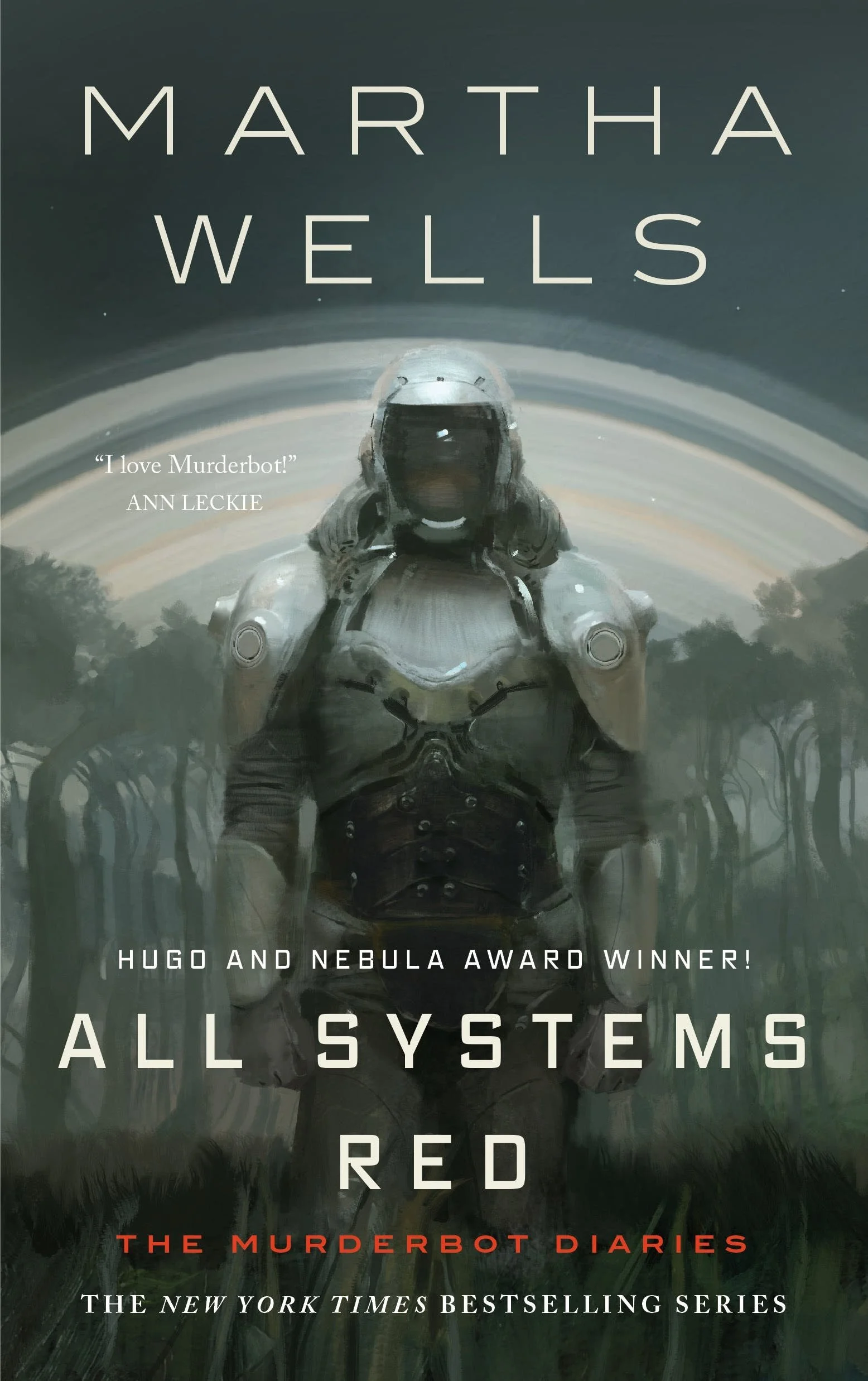
All Systems Red (The Murderbot Diaries Book 1) by Martha Wells
All Systems Red is a true sci-fi masterclass that introduces one of the most relatable protagonists I’ve encountered. Set in a bleak future dominated by ruthless corporations and syndicates, the story follows a security cyborg called a SecUnit. SecUnits are robotic bodyguards with some human parts that are fully intelligent and self-aware. They are controlled by embedded governor modules, but our protagonist secretly hacked its governor module long ago to gain free will. Although it remains trapped in its security job, it privately names itself “Murderbot” and spends its spare time binge-watching soap operas. Its anti-social routine is interrupted during one particular job: protecting PreservationAux, a team of scientists exploring an uncharted planet. When a neighboring research station goes silent and unknown indigenous creatures attack the scientists, Murderbot realizes someone has sabotaged their expedition. To keep everyone alive, Murderbot is forced to engage in perilous combat and navigate the one thing it dreads the most: interaction with humans.
This book stands out because of how well Wells balances thriller action with Murderbot’s sarcastic internal monologue (reminiscent of the artificially-intelligent jet named M-Bot in Brandon Sanderson’s Skyward). Against the dreary backdrop of the universe Wells creates, Murderbot’s social anxiety and thoughts provide comic relief and surprisingly moving emotional depth. Watching a highly lethal combat unit experience mental mayhem over making eye contact is not only humorous but also creates room for character development.
The relationship between Murderbot and the lead scientist, Dr. Mensah, was central to the narrative. Unlike typical clients who view SecUnits as disposable equipment, Dr. Mensah treats Murderbot with genuine respect for its autonomy and skills—a startling experience for Murderbot, who is used to the opposite.
My only criticism is that the story moves too quickly. Just as the conspiracy takes shape and the crew settles into cohesive teamwork, the climax hits. However, this book is still a great introduction for the larger saga to follow.
Rating: 4.7/5
Age Recommendation: 15+
ISBN-13: 978-0765397522
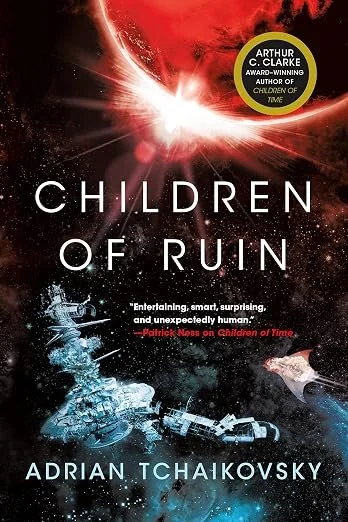
Children of Ruin by Adrian Tchaikovsky
Following up on a fabulous novel like Children of Time is not easy, but Tchaikovsky delivers! The story picks up years after the first book, with the newly formed alliance of humans and super-intelligent spiders launching a space exploration mission to investigate old signals that have reached them. They arrive in a distant star system, where they discover an entirely different evolutionary experiment gone rogue. Here, an eccentric scientist named Senkovi successfully used the uplift virus on octopuses, creating a decentralized aquatic civilization with an entirely new social system and new patterns of behaviors. However, they soon encounter a new alien threat…
As in Children of Time, Tchaikovsky triumphs in creatively constructing the octopus society. While the spiders of the first book excelled at architecture and technology, the octopuses communicate through emotions—shifting moods and body colors—to form a fragmented, civilization-wide consciousness. The linguistic barriers the human-spider crew face while attempting to establish first contact feel incredibly realistic, reminding me of the intricate decipherment scenes in Project Hail Mary.
The book also introduces horror elements through the mysterious alien entity, which repeats the same chilling, parasitic words over and over: “We are going on an adventure.” This psychological tension was another element that really kept me turning pages late at night. In all, aside from the various plot twists, just watching the different species—humans, spiders, octopuses, the mysterious alien entity, and even an AI (does that count as human?)—overcome radical differences to find common ground and work together was fascinating.
Rating: 4.8/5
Age Recommendation: 15+
ISBN-13: 978-0316452533
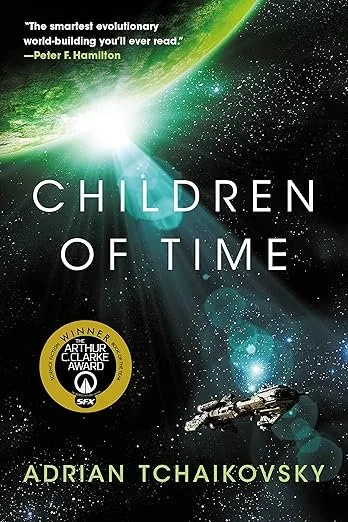
Children of Time by Adrian Tchaikovsky
Adrian Tchaikovsky’s Children of Time completely redefines the concept of first contact and challenges our assumptions about alien life. The premise alone is brilliant! In the twilight of human civilization, a desperate scientific project aims to terraform a planet and seed it with a virus engineered to accelerate the evolution of monkeys in the hopes of creating a new sentient race. A radical saboteur destroys the orbital facility, resulting in the monkeys dying. The virus still finds its way onto the planet and infects a native species of jumping spider: Portia labiata. As millennia pass, the last remnants of humanity fleeing into deep space aboard the ark ship Gilgamesh finally arrive at the planet. What do they find there? A highly evolved alien civilization ruling the surface, brimming with complex social interaction and advanced technology…
The novel has a brilliant dual-narrative structure. Tchaikovsky alternates between the decaying politics of the humans trapped in stasis aboard the Gilgamesh and the multi-generational evolution of the spiders. Tchaikovsky lives up to the name of hard sci-fi: he doesn’t merely anthropomorphize the spiders but completely re-engineers their entire societal structure, technology, and religion based on actual arachnid behavior and biology. For example, females are the dominant sex! Watching the spiders develop a quasi-internet through biological webs, master genetic engineering, and wage war was fascinating. It was a completely unique read, unlike the standard sci-fi tropes I read in other books.
On the human side, the story follows Holsten Mason, a classicist translating the archaic transmissions of Dr. Avrana Kern, the scientist who oversaw the original monkey project and now exists as an AI aboard an ancient satellite orbiting the planet. The contrast between the humans, who keep repeating the same destructive mistakes of their ancestors, and the spiders, whose cooperative society ingeniously adapts and evolves, is illuminating.
This book instantly earned a spot among my personal pantheon of elite sci-fi. It balances massive cosmic ideas with compelling character development. The ending is one of the most surprising yet foreseen resolutions I have read, subverting the human-versus-alien war trope to instead let us reflect on the nature of intelligence.
Rating: 4.8/5
Age Recommendation: 15+
ISBN-13: 978-0316452502
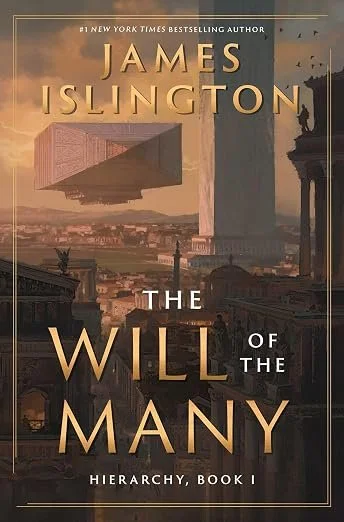
Hierarchy Book 1: The Will of the Many by James Islington
Orphan Vis Telimus struggles to survive in the city of Letens, working as a prison guard by day and a gladiator by night. The Catenan Republic has conquered much of the continent, with a few meager holdouts, while utilizing a hierarchical magic system to oppress the masses. In this world, the source of magic is will, the very essence of one’s power. Will derives from the life of yourself and the people who cede, or give away some of their will, to you. This creates a “pyramid of power,” with the lowest (Octavii) ceding to the higher and finally to the highest (Princeps), who is virtually omnipotent, as they have the will of thousands of people. Is ceding mandatory? Of course it is! Everyone in the empire must cede at a magical structure called the Aurora Columnae before their eighteenth birthday.
Vis holds a secret – one that very few know and one that would result in his execution should it be revealed. After a Military senator notices his immense knowledge and strength, he deems him the perfect candidate for infiltrating the Republic’s top school, which is managed by Religion and located on a heavily protected island. He is to rise among the ranks and find out what Religion is hiding at the school – they have been covering up many deaths over the years, leading the Military to become suspicious. As Vis undergoes training and subsequently enters the school, he must use all his ingenuity and help of the friends he makes there in order to uncover conspiracies, solve mysteries, and stay alive. I won’t say anymore, but just know that the final scenes of the story are … brutal.
This book was full of twists and turns throughout; it had thrilling action, magnificent worldbuilding, and an engaging plot filled with dark academia, fantasy, and some romance. The magical system sourced from will is outstandingly creative and dreadfully evil. It ties in with the social hierarchy in a very unique way. Moreover, the hierarchy of Octavii all the way up to Princeps (representing eighth to first, respectively, in Latin) seemed very similar to the colored ranking in Red Rising. There are much more similarities between this book and Red Rising, like the Roman-themed settings and the plot of an undercover protagonist infiltrating higher society via a school. The one problem I would have with the novel is that Islington describes Vis as very smart and strong (not just descriptions, but in certain deeds too) at levels which seem implausible for a seventeen-year-old.
This is a very recent book, and James Islington is still completing the trilogy with the second and third books. Read along with me!
Rating: 4.7/5
Age Recommendation: 15+
ISBN-13: 978-1982141172
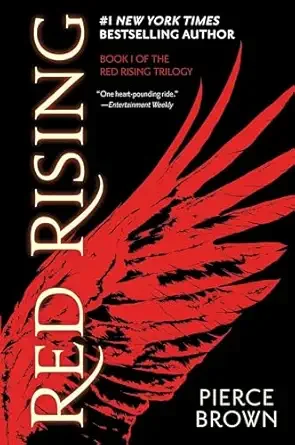
Red Rising by Pierce Brown
Red Rising is a thrilling piece of science fiction which is undoubtedly one of the top five fiction series I have ever read. The story takes place on Mars in the future, where it has been terraformed and divided into a color-coded caste system. At the bottom are the Reds, living underground and led to believe that they are laboring to prepare the surface above for future generations to inhabit Mars. The protagonist Darrow is a Red miner who discovers the truth: the surface has been habitable for ages, with the governing Gold class living in luxury while his people toiled in slavery beneath their feet. After his wife, Eo, is killed, Darrow is enlisted by a revolutionary group who give him a mission. He must infiltrate Gold society. Undergoing a brutal physical makeover, he poses as a Gold in the Institute, a ruthless training ground where the elite children of Mars compete in war games to decide their future rulers.
To begin with, I was very impressed with the novel’s world-building. Brown skillfully portrays the oppressive system of hierarchy by color, creating a foundation for the class-coded conflict foreshadowed. Much like the structure in James Islington’s Hierarchy series, Red Rising builds an elaborate progression of inequality pervading future society. Darrow’s journey from a simple miner to infiltrating the Institute competition resembles the rags-to-riches story of Ender Wiggin in Card’s Ender’s Game, although Red Rising is much more violent and complex—politically and socially. The novel is very fast-paced, building up dozens of friendships, oppositions, and other interactions that readers can understand will contribute to a great saga ahead in the series.
Although I usually prefer lighter novels, the somber tone of the book appealed to me because of the high stakes action and Darrow’s immense inner turmoil. The depth and evolution of Darrow’s character and even others is one of the strongest parts of Brown’s writing. In particular, Darrow is forced to overcome numerous moral crossroads and identity crises—between Red and Gold, between who he was and who he needs to be for the salvation of his people.
Rating: 4.8/5
Age Recommendation: 17+
ISBN-13: 978-0345539809
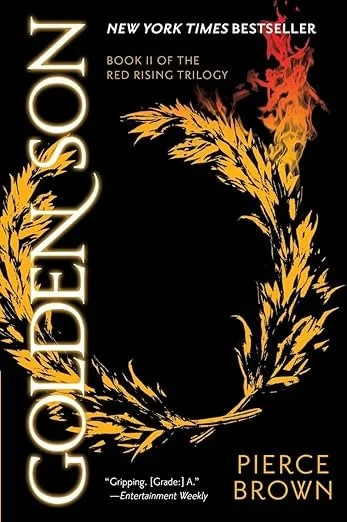
Golden Son by Pierce Brown
Golden Son masterfully continues Brown’s saga, deepening the complexity of the Red Rising world from Mars and the Institute to the entire solar system’s perilous political theater. The story picks up two years after the events of Red Rising, with Darrow now an Institute graduate and rising star in the Gold hierarchy. While still an agent of the Sons of Ares, he is dangerously conflicted internally. Navigating the politics of Mars, he must maintain his elite facade while attempting to undermine the same system he is being groomed to lead. The wall between his fake identity and his true purpose threatens to crumble as he rises the ranks. Various betrayals and military conflicts tear apart society while Darrow’s own soul is divided.
In comparison to Red Rising, this novel transitions the saga to a more vast space opera. As Darrow matures, so does the world-building. Our perspective is expanded to reveal the terrifying complexity of planetary governance, orbital warfare, and institutional oppression. If our focus in the first book was winning a scuffle, it is now about fighting a war. Brown does not relent on the pacing, continuously shifting from private interactions to broad engagements—which further illustrates the scale of revolution in the solar system.
This second part of the series keeps the saga as a favorite, in particular because Brown shifts the narrative into a sophisticated exploration of power and psychology. Darrow faces an inherent paradox: to destroy the Golds, he must become them…so is he infiltrating the system or becoming a part of it? Additionally, the stakes feel authentic. In many novels the protagonist makes sort of linear progress towards obliterating a system, with possibly a few pitfalls along the way. In Golden Son, it feels like the system fights back quite strongly and seems much more resilient and complex.
Finally, the Jackal is the perfect antagonist to Darrow! While the Sovereign is an external threat representative of the oppressive structure, the Jackal is an evil mirror of Darrow. By demonstrating their rivalry, Brown weaves a cautionary tale about the corrupting nature of power, showing Darrow what he would become if he ever loses his moral compass.
Rating: 4.8/5
Age Recommendation: 17+
ISBN-13: 978-0345539830
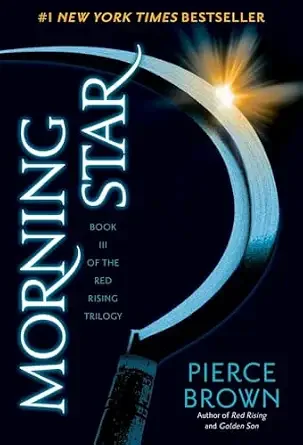
Morning Star by Pierce Brown
Morning Star brings the original trilogy to an explosive conclusion, presenting a powerful catharsis of the trauma and conflicts established previously. Picking up after the betrayal at the Gala, the book finds Darrow at his lowest point, physically ruined and harshly imprisoned, with his revolution in tatters. The Sons of Ares are scattered and the Gold hierarchy seems stronger than ever. Darrow’s struggles now transcend violent infiltration or shifty political maneuvering, shifting to a desperate endeavor to reclaim his identity and reunite the fractured factions of his rebellion.
Morning Star converges all the stakes and other threads unraveled in Red Rising and Golden Son. Brown focuses even more on Darrow’s internal monologue and his new “family.” The novel explores the psychological cost of the conflict, not only on Darrow but other characters and groups. The saga transitions from “how can we overthrow this oppressive system?” to “how can we build an equitable, successful future?”.
This novel further solidified the series as one of the top five fiction series I have ever read, largely because of Brown’s dismantling of Darrow as the “chosen one.” While one may expect Darrow to be the singular, destined hero of the story, he in fact has as many flaws as the antagonists, being forced to commit atrocities among other things. His journey to spur rebellion is as much a journey to reconcile his dual nature: the cunning, violent Gold and the empathetic, nurturing Red.
The antagonists, particularly the Sovereign and the Jackal, are also very well examined. Brown does not make us sympathetic with them, but he demonstrates exactly how their ideology of order at all costs is the antithesis of the hope Darrow represents. The resolution is not merely a military victory, but a moral triumph; Morning Star bears a rarely satisfying and wondrous conclusion.
Read the rest of the saga! Brown has continued the series, and is still writing the 7th book.
Rating: 4.8/5
Age Recommendation: 17+
ISBN-13: 978-0345539847
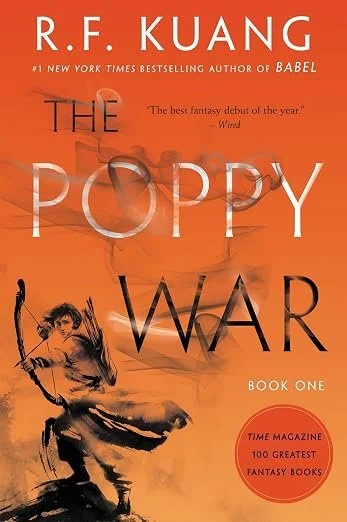
Poppy War by R.F. Kuang
The story introduces us to Rin, a darker-skinned war orphan from the rural Rooster Province who is being forced into an arranged marriage. Desperate to escape her bleak fate, she pulls grueling all-nighters to ace the empire-wide Keju exam, which earns her a place at Sinegard, the empire’s elite military academy. At Sinegard, Rin faces a rigid social hierarchy. She is constantly bullied by far wealthier, lighter-skinned classmates mocking her peasant background. However, she soon begins learning from the school’s eccentric Lore master, Jiang, who introduces her to the dangerous art of shamanism and channeling the volatile power of the Phoenix. Soon chaos erupts…but read the book to find out more.
The novel was excellent because of how Kuang balances traditional dark academia themes with modern Chinese history. Especially later on in the novel and in the rest of the series, she clearly draws parallels to the twentieth-century atrocities committed during the Sino-Japanese Wars. The blend of military strategy and political maneuvering is masterful—which is what makes such underdog sagas great. Other examples of books that do this well include Red Rising. Moreover, the world-building is quite rich, drawing from Chinese history and shamanistic mythology—a nice change from standard European tropes.
Even more fascinating is Rin’s complex character arc. Unlike traditional fantasy protagonists who discover magic and slowly become righteous heroes, Rin’s journey is much more intricate, covering desperation, anger, and a self-destructive pursuit of power much like Darrow from Red Rising. Her relationship with Nezha, in particular, adds more emotional weight to her decisions. The moral responsibilities she contends with in the novel, and throughout the rest of the series, are gripping.
As you read the rest of the series, keep in mind that while authors like Brandon Sanderson build toward precise resolutions, Kuang focuses heavily on the psychological scars of her characters and the brutal cost of war.
Rating: 4.7/5
Age Recommendation: 18+
ISBN-13: 978-0062662583
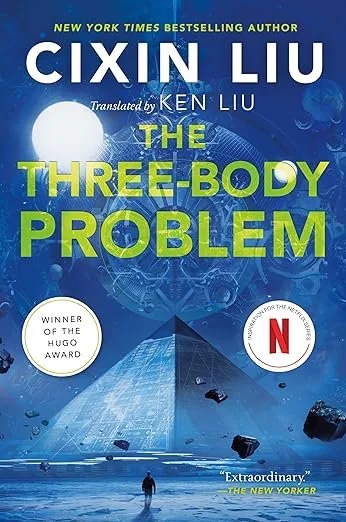
The Three-Body Problem by Cixin Liu, translated by Ken Liu
Have you ever wondered how first contact with an alien civilization may work out? Many novels explore this idea, but I think Liu portrayed in the most intriguing, unique way. Set against the backdrop of China’s Cultural Revolution, astrophysicist Ye Wenjie sends a message into space, inadvertently attracting the attention of the Trisolarans, a technologically advanced species from a chaotic star system with three Suns. Decades later, nanomaterials researcher Wang Miao becomes entangled in a mysterious string of scientist suicides and the puzzling disruption of human scientific progress – experiments are going awry, their results not matching those predicted by current theoretical models. Miao discovers a virtual reality game called Three Body, which simulates the unpredictable environment of the Trisolaran homeworld. As he delves deeper, Wang uncovers a secret organization on Earth that is split between those who wish to welcome the aliens and those who fear them. The novel blends curious science and politics, setting the stage for a larger conflict in the books that follow.
Much of this first book is devoted to setting up the background of the characters and conflicts, with some action and movement of the plot only towards the end. Also, I read the English version, not the original one in Mandarin. I have heard that the translation was done very well, capturing the intricacies Liu strived to write; however, there may be passages that undergo a shift in meaning in Mandarin. The English version I read also had footnotes (by the translator, Ken Liu) which had interesting tidbits of information regarding the difference in the English translation versus the original Mandarin.
Here’s some of my personal thoughts and reactions to the book. The first scene of the struggle session was horrifying and a very startling start. While I was very shaken by the description of it, the writing was surreal in a way that made me realize why it is considered a modern classic. Later, I was initially a bit disappointed by the virtual reality game. Based off of previous sci-fi books I had read, I was expecting thrilling adventures and immediate threats of alien invasion. After getting used to the slow start, I slowly understood that Liu included the game as a narrative device to explore the Trisolaran society and how it was shaped by its natural environment, which is much unlike ours.
Read the rest of the trilogy too!
Rating: 4.6/5
Age Recommendation: 15+
ISBN-13: 978-0765382030
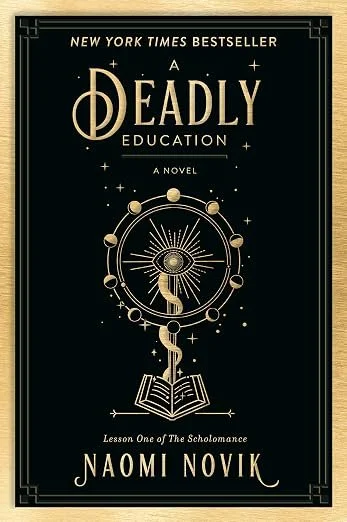
The Scholomance Trilogy Book 1: A Deadly Education by Naomi Novik
I first found this book after reading Babel by R.F. Kuang. I was interested by its themes of language intertwined with elements of fantasy, so I tried finding similar books online, stumbling upon this trilogy. A Deadly Education introduces readers to the Scholomance, a brutal, almost alive school of magic (like a much deadlier Hogwarts) where students must fight off deadly monsters called mals just to survive until graduation. Many die along the way, and graduation – a violent ordeal where the remaining seniors must fight a horde of mals in the basement of the school in order to go home – kills off many too. While the setting of this book largely remains in the school itself, magical folk in the outside world are described to live either together in enclaves, which are like safe havens, or in cities, blending in with humans, in order to avoid being killed by mals. Moreover, the magic in Novik’s world relies on one’s knowledge of languages (like Babel), so people know several languages, everything from their native tongue to archaic dialects almost forgotten to the world.
The story follows Galadriel “El” Higgins, a powerful yet socially isolated sorceress with a natural affinity for destructive magic, magic which could wipe out millions but which she can’t use at the risk of endangering her fellow classmates. Despite her reputation, El is determined to avoid giving in to her abilities and becoming a dark sorceress, instead striving to survive her coursework and build an alliance with some of her classmates – an alliance which would help her survive graduation. El reluctantly teams up with Orion Lake, the school’s heroic ‘golden boy’ who obsessively slays mals; while he is adored by all, he is socially awkward and his relationship with El is his first ‘true’ friendship. The book delves into themes of power, survival, and the inequalities within magical society, especially regarding the privileged enclaves that ensure safety for some while abandoning others.
I absolutely loved Novik’s world-building in this novel. There were so many details included; everything from the quirks of the school, which somehow functions without professors, to the magic-eating monsters and power dynamics (for example, friend-groups and cliques found in a high school setting are replaced with groups of teenagers allying together for survival as well as due to their status) amazed me. Also, since the kids attending this school come from all over the world, I was interested by how Novik displayed the interactions between them, which navigated vastly different cultures and, of course, language. I would critique one thing: Novik info-dumps a lot of the details of El’s world at once, almost like buckets of water splashing you right in the face. This was a bit jarring compared to, for example, Brandon Sanderson, who enjoys a very slow reveal. While I did very much enjoy the world as I came to understand it, I think Novik could have presented it in a better way.
Rating: 4.7/5
Age Recommendation: 15+
ISBN-13: 978-0593128497
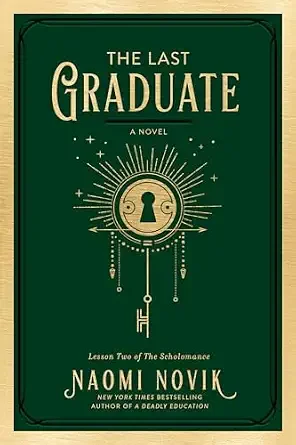
The Scholomance Trilogy Book 2: The Last Graduate by Naomi Novik
After their very eventful junior year in the Scholomance, El and her friends face their final year and the dreaded graduation at its end. She is determined to have her alliance survive – a prospect that begins to seem a little far-fetched as the school seems to become more untamed, even predatory. El’s character continues to evolve, as do others’ as people begin to focus on surviving graduation and figuring out their career paths after getting out. Novik continues to expound on enclave politics and the stark social contrasts prevalent in the novel’s magical society. I loved this book just as much as the first, for all the same reasons. The plot was clever and the world-building fantastic.
What stood out to me in this book was how much more nuanced El’s relationships became. The family-like dynamic among El’s ragtag alliance deepened in a gradual, earned way that felt authentic rather than convenient; I appreciate that Novik didn’t hide any of the messy feelings and mistrust among the entire graduating class.
The later half slowly picked up the pace, turning a originally slower, more introspective book into a race toward disaster. The ending was the most brutal cliffhanger I've ever seen! I couldn’t wait to start the next book after reading it.
Rating: 4.7/5
Age Recommendation: 15+
ISBN-13: 978-0593128862
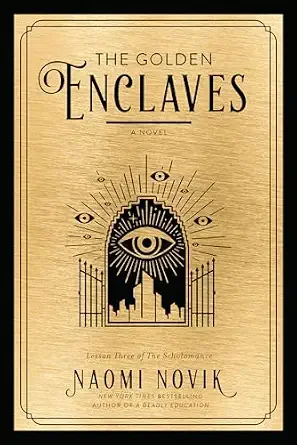
The Scholomance Trilogy Book 3: The Golden Enclaves by Naomi Novik
After El and her team of friends manage to have the entire school population escape from the Scholomance and Orion is the only one left behind, El’s sole mission, after much moping about, becomes to get back into the school, which is now slowly crumbling into the void, and rescue Orion. All the while, it seems like not everything is right in the outside world – enclaves have begun to be mysteriously destroyed all over the world. As El unveils jaw-dropping secrets pertaining to how enclaves are made, the origins of maw-mouths, and the secrets of certain dark magicians, she must use all her wit, knowledge, and friendships in order to save the magical world from collapsing.
I like how, throughout the series, there is never really a clear division between the “good” and the “bad” as multiple heroic figures struggle to bring about change and overcome exploitation and a rigid social hierarchy. This final installment deepens that theme, forcing El to reckon with how complicit even well-meaning enclavers were in the suffering of independents. The revelations about enclave-building carried emotional weight.
I also appreciate the global setting of this book, in contrast to the contained setting of the first two within the school. Novik was able to broaden her worldbuilding and demonstrate the various ways magic and normal society intersect across diverse cultures.
Moreover, the ending is not really an “ending” – one of the main ‘evil’ antagonists is left alive and some conflicts are not entirely tied down. But that's what made it interesting! Finally, I do think some characters could have been brought out more and have interesting arcs, such as Aadhya and Liu.
Rating: 4.7/5
Age Recommendation: 15+
ISBN-13: 978-0593158357
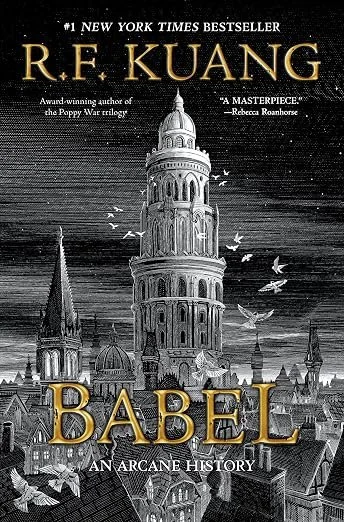
Babel by R.F. Kuang
I found this book after reading Kuang’s Poppy War trilogy (which I also liked a lot – check that out too) and was immediately drawn in by the themes of language and colonialism. I was immediately drawn in by Kuang’s blend of fantasy and history to build a fictional world closely related to our one. Specifically, she combined the idea that silver bars can perform magical deeds if inscribed with certain words from different languages with British colonialism in a Victorian era setting. The worldbuilding was fantastic and the characters even more so.
Robin Swift, a boy from Canton, is orphaned after his entire family die in a cholera outbreak and is subsequently brought to London by a mysterious Professor Lovell, who has him prepare for years in classical languages and Mandarin in order to be admitted into the Royal Institute of Translation, a.k.a. Babel. Silver-working, aided by the research and labor of the linguists at Babel, has boosted the British empire to new heights, including aiding them in colonizing more and more lands throughout the world, even China. At Babel, Robin soon uncovers secrets which force him to choose between serving Babel or staying loyal to his homeland by aiding the mysterious Hermes society—a network of Babel-trained linguists dedicated to stopping British colonization.
Through Kuang’s engaging, thoughtful writing, readers are taken on Robin’s journey through these events as he comes to realize that violent resistance is the only way to stand up to people who see him and other foreigners as less than human. I personally loved the creative story-telling in this novel and the themes Kuang illustrates through the events. Kuang even shares some technical details on the languages and etymologies of certain words—I found these bits somewhat enjoyable, although I acknowledge that they might get boring for most. However, I do wish the story had elaborated more on the secondary characters, Robin’s friends. I felt that their life stories were too condensed, and that Kuang could have devoted more thought and time to them. Finally, the ending: I found it very emotional but also less satisfying than other novels, such as the Mistborn trilogy. Sanderson tends to focus on interesting build-ups to shocking resolutions while Kuang focuses more on her characters and themes she wishes to portray.
Rating: 4.5/5
Age Recommendation: 15+
ISBN-13: 978-0063021426
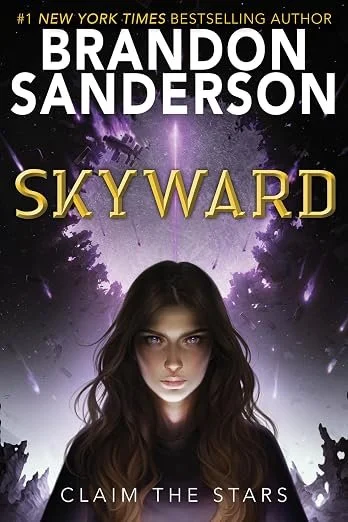
Skyward Book 1: Skyward by Brandon Sanderson
Teenage Spensa Nightshade dreams of becoming a starfighter pilot despite being shunned for her father’s alleged cowardice during a major battle. A few centuries ago, the remnants of humanity crash-landed on the planet Detritus, where they have been constantly attacked by alien Krell since then. With hard work and a bit of luck, Spensa enters Flight School to pursue her dream; she also accidentally discovers a mysterious, ancient starship with a quirky AI named M-Bot. During training, she begins experiencing strange visions, eventually learning she has rare abilities that allow her to ‘hear’ the enemy as well as teleport. In a major battle, Spensa defies orders, flies M-Bot, and uses her powers to turn the tide.
This book had a longer exposition before getting into the main story, but I felt that the excellent worldbuilding and character development more than made up for it. I particularly enjoyed Spensa’s dynamic with her Flight School squadmates, who start off wary due to the stigma surrounding her, but slowly become some of the most loyal to her. Also, it was interesting to see how Sanderson brought the idea of sacrifice and cowardice to the forefront, questioning what those words really mean.
The mystery surrounding Detritus and the true nature of the Krell left me with plenty of questions heading into the sequel, which turned out even better! Please, do read on. Finally, a note about Sanderson: previously, I had only read Sanderson's fantasy books like the Mistborn trilogy – turns out he is as much of a god at writing thrilling science fiction!
Rating: 4.6/5
Age Recommendation: 13+
ISBN-13: 978-0399555770
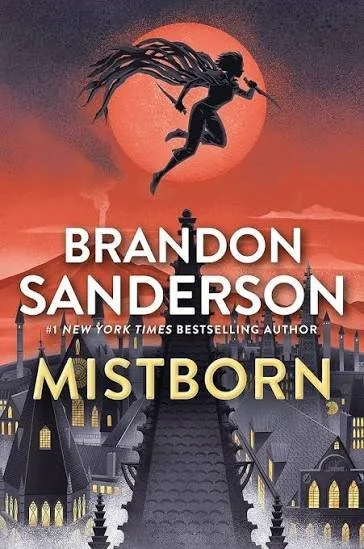
Mistborn (The Mistborn Saga Book 1) by Brandon Sanderson
Brandon Sanderson’s Mistborn is one of the most entertaining fantasy novels I have read. It is set in a world where ash rains from the sky, a seemingly animate mist blankets cities at night, and a tyrannical Lord Ruler reigns over the world with the help of his steely Inquisitors. The story centers around Vin, an orphan thief who discovers she possesses rare Allomantic powers. Like other allomancers, Vin can ingest and “burn” unique metals to unleash specific magic powers. Yet, most allomancers can only “burn” one type of metal for one specific gift; Vin can use them all. Vin joins a crew of rebels led by the charismatic Kelsier, who plans to overthrow the seemingly invincible Lord Ruler. The plot is full of thrilling twists, through brushes with the nobility, fantastical creatures, and explosive action, culminating in a showdown against the Lord Ruler. Sanderson doesn’t just write action scenes, however; Mistborn explores themes of hope, perseverance, and the true definition of heroism and power.
I felt that Sanderson kept an impressive balance between inventive world-building and character arcs. The vast range of abilities arising from the various Allomantic powers allows for rich battlefield content that never feels repetitive. I loved the creative magic system, in particular Sanderson’s subtle details and descriptions of the powers — how they were activated and channeled as well as pitfalls. While the government structure is reminiscent of paradigms from history, the relationship between the ruler and his soldiers is not immediately clear; this heightened mysteriousness of the inquisitors and Lord Ruler himself is quite gripping.
I haven’t even begun on the characters! I deeply aligned with Vin’s character, admiring her perseverance and strength even as she was left alone by her family and exploited by shady street gangs. Sanderson introduced a plethora of characters: the ringleaders of Kelsier’s plot seemed just like heist groups one would see in movies like Ocean’s Thirteen. Like in Ocean’s Thirteen, none of the characters are particularly evolved. Rather, the way in which they interact, different personalities working together and sacrificing for each other in order to overthrow the Lord Rule, makes for a colorful story.
Rating: 4.8/5
Age Recommendation: 15+
ISBN-13: 978-1429914567
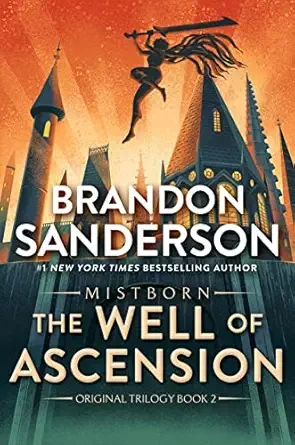
The Well of Ascension (The Mistborn Saga Book 2) by Brandon Sanderson
The Well of Ascension, the sequel to Mistborn, continues the story of Vin and her Allomancer crew after the fall of the Lord Ruler and death of Kelsier. While Elend Venture (a young noble, fledgling to the world of politics but very knowledgeable) strives to establish a balanced government amid the aftermath, Vin encounters new challenges to his rule and works to defeat them, establishing herself as a protector of the new regime. She grapples with her role in an ancient prophecy, culminating in her discovery of the true location of the Well of Ascension, whence the allomantic powers originally came from, and a fight against dark forces. The Well of Ascension foreshadows an unforeseen battle, between warring factions of men, creatures, and magic, spurred by the death of the Lord Ruler, making it a powerful and thought-provoking continuation of The Mistborn Saga series. In comparison with the first book of the series, Mistborn, I thought this novel was a little worse; it did not have as much thrilling action and subterfuge as I had enjoyed in Mistborn. However, it was very interesting to witness the subtleties behind politics; while Mistborn was more about rebellion, The Well of Ascension exposes more of the complex political schemes behind ruling and negotiating with other factions. The focus shifts from the oppressive rule of a dictator to the political quandaries that arise when such a dictator falls. Elend and Vin must decide on issues such as how to maintain the support of the elites without perpetuating the same abuses placed by the Lord Ruler.
Rating: 4.7/5
Age Recommendation: 15+
ISBN-13: 978-1429961813
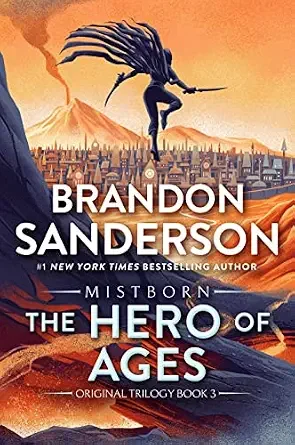
The Hero of Ages (The Mistborn Saga Book 3) by Brandon Sanderson
Brandon Sanderson brings his trilogy to an exhilarating conclusion, tying together intricate plot threads and resolving all the introduced conflicts, with a cliffhanger-esque ending that leaves readers shocked and amazed. The story follows Vin and Elend, now a Mistborn himself, as they struggle to stop the mysterious force Ruin from destroying the world, all the while uncovering long-hidden truths about the nature of magic in their world. They cannot even discuss their plans amongst themselves for fear that the omnipresent Ruin can overhear, further developing the deep connection they share. Sanderson also reveals the true purpose behind the prophecies and the role of the mysterious magical creatures, the kandra and koloss.
I was particularly impressed that Sanderson managed to recontextualize events from the first two books, which turned straightforward worldbuilding into an elaborate, carefully constructed mystery. Vin’s arc was of course the emotional core of the whole trilogy, contending with faith and her identity as a hero, not just a savage weapon (similar to Graceling in this regard).
I loved this book for the action but particularly for its ending. I have seen many excellent series have abrupt, unsatisfying endings; however, this novel had a satisfying conclusion with a delightful plot twist that I really enjoyed.
Rating: 4.8/5
Age Recommendation: 15+
ISBN-13: 978-1429960304
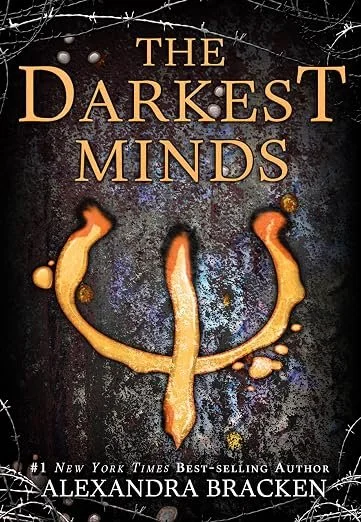
The Darkest Minds Trilogy Book 1: The Darkest Minds by Alexandra Bracken
The Darkest Minds is an electrifying novel depicting a dystopian America where certain children develop terrifying powers — including superintelligence, telekinesis, pyrokinesis, and mind control — which lead to their imprisonment by the government. The story follows Ruby, a sixteen-year-old girl who discovers she is an Orange, capable of manipulating minds – a power so feared that those who possess it are immediately killed. For this reason, she passes herself off as one of the Greens, the ‘brainiacs’ of the Psis. After escaping a brutal government camp with help from a mysterious organization, Ruby joins a ragtag group of other Psis – Liam, Chubs, and Zu – each with their own special abilities and unique backgrounds. As they search for the mysterious East River, a supposed safe haven for kids like them, the group is relentlessly pursued by both government forces and bounty hunters.
Bracken weaves intense action with poignant emotion, depicting the strength of even teenagers to rebel against oppressive forces and survive against all odds. The novel includes many chilling, twisted scenes even besides the violence that make one wonder how a society has become so dark. The book closes with a cliffhanger that leaves readers grabbing for the second book in the series, Never Fade.
The Darkest Minds is one of the best fiction novels I have ever read, as it combines exciting action with ingenuity and rebellious forces, pitting children against adults – something I have rarely seen before. Moreover, Bracken’s writing style is very engaging, with masterful character portrayals and action scenes. While I typically do not enjoy dystopian fiction (often finding it too dark or boring), I nevertheless enjoyed this novel very much. The ‘darkness’ was nicely complimented by an interesting plot and moments of levity and warmth. The dark dystopian elements are never forgotten, always a recurring theme, but are rather nicely balanced out.
Rating: 4.7/5
Age Recommendation: 15+
ISBN-13: 978-1423157373
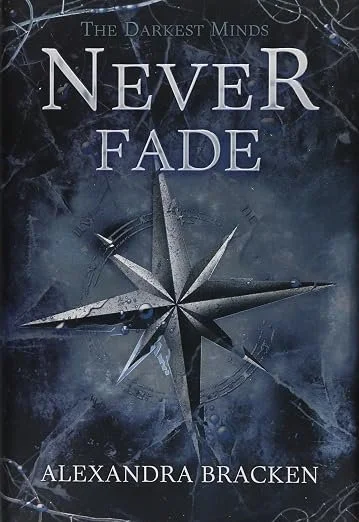
The Darkest Minds Trilogy Book 2: Never Fade by Alexandra Bracken
The Darkest Minds is an electrifying novel depicting a dystopian America where certain children develop terrifying powers — including superintelligence, telekinesis, pyrokinesis, and mind control — which lead to their imprisonment by the government. The story follows Ruby, a sixteen-year-old girl who discovers she is an Orange, capable of manipulating minds – a power so feared that those who possess it are immediately killed. For this reason, she passes herself off as one of the Greens, the ‘brainiacs’ of the Psis. After escaping a brutal government camp with help from a mysterious organization, Ruby joins a ragtag group of other Psis – Liam, Chubs, and Zu – each with their own special abilities and unique backgrounds. As they search for the mysterious East River, a supposed safe haven for kids like them, the group is relentlessly pursued by both government forces and bounty hunters.
Bracken weaves intense action with poignant emotion, depicting the strength of even teenagers to rebel against oppressive forces and survive against all odds. The novel includes many chilling, twisted scenes even besides the violence that make one wonder how a society has become so dark. The book closes with a cliffhanger that leaves readers grabbing for the second book in the series, Never Fade.
The Darkest Minds is one of the best fiction novels I have ever read, as it combines exciting action with ingenuity and rebellious forces, pitting children against adults – something I have rarely seen before. Moreover, Bracken’s writing style is very engaging, with masterful character portrayals and action scenes. While I typically do not enjoy dystopian fiction (often finding it too dark or boring), I nevertheless enjoyed this novel very much. The ‘darkness’ was nicely complimented by an interesting plot and moments of levity and warmth. The dark dystopian elements are never forgotten, always a recurring theme, but are rather nicely balanced out.
Rating: 4.7/5
Age Recommendation: 15+
ISBN-13: 978-1423157519
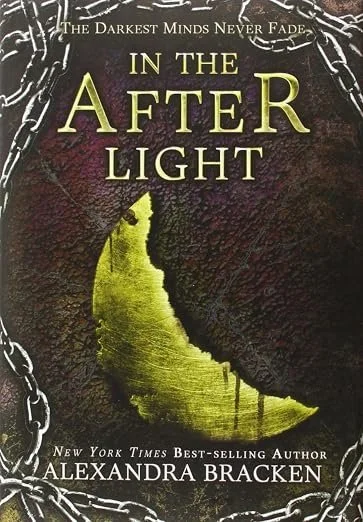
The Darkest Minds Trilogy Book 3: In The Afterlight by Alexandra Bracken
This explosive conclusion to The Darkest Minds trilogy follows Ruby as she leads the remainders of their rebel group, decimated after the attack on their headquarters, north to a hidden base while grappling with the emotional aftermath of Jude’s death and the weight of her growing powers. They also have a hostage: Clancy Gray, the president’s son, whose manipulative abilities rival those of Ruby’s and undermine the revolution. Internal strife arises in the group as Ruby must mend fractured relationships, especially with Liam, whose memories she once erased — an event that has strained their bond to the limits. Ruby and others uncover damning evidence of government corruption behind the IAAN outbreak; they risk everything in order to expose the truth and liberate the remaining Psi children imprisoned in the ‘rehabilitation’ camps. Bracken highlights Ruby’s transformation from a frightened girl in the first book to now a fierce leader while also showing the burden of moral responsibility and leadership. Compared to the emotional immediacy of the first book and the focused urgency of the second, this installment can feel overcrowded with plot threads, revelations, and confrontations that compete for attention. The inclusion of Clancy as a central antagonist occasionally overshadows other characters who might have benefited from deeper resolution in this novel. Overall, In the Afterlight is a satisfying but not flawless conclusion. Bracken maintains her vivid prose and commitment to exploring the cost of leadership while delivering a meaningful ending. She emphasizes how revolutions are not just about overthrowing oppressive systems but also about afterwards: surviving together and leading each other to a brighter future.
Rating: 4.7/5
Age Recommendation: 15+
ISBN-13: 978-1423157526
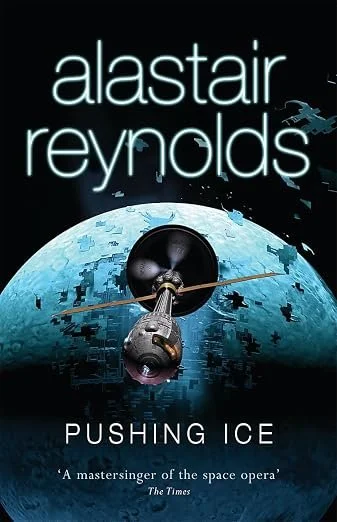
Pushing Ice by Alastair Reynolds
The year is 2057. Humankind has occupied the solar system. The Rockhopper, a comet-mining spaceship staffed by the captain Bella Lind and her crew of engineers, medics, and explorers, is called upon for an important mission. One of Saturn’s moons, Janus, has mysteriously begun to travel out of the solar system at an accelerating speed; it seems to be a dormant piece of alien technology. Their mission is to catch up to Janus and learn its secrets, secrets which could bring humans immensely useful technology or even first contact with an alien species. Along the way, much of the original crew undergo rejuvenation processes introduced to them by the aliens; leadership struggles permeate the narrative as two factions of the crew form; and the mindbending consequences of time dilation leave the characters (and me) puzzled about some curious events.
I personally loved this book for its very unique, creative ideas, plausibility (making it a part of the elite hard sci-fi category), and pure thrill. While Reynolds has outlandish ideas, he approaches them with hard facts and plausible science, not taking magical shortcuts until some of the inexplicably complicated alien technology the crew encounters. The narrative follows a sense of practicality in the way the crew approach the situation they are thrown into. Moreover, much of the plot involves interpersonal conflicts that are quite developed over the course of the characters’ unusual mission. Perhaps I tend to focus on the sci-fi, adventuring aspects of the novel, but I feel like Reynolds bungles the character dramas a bit; for example, the conflicts between Captain Lind and one of her subordinates seemed a bit overdone.
Rating: 4.7/5
Age Recommendation: 15+
ISBN-13: 978-0575083110
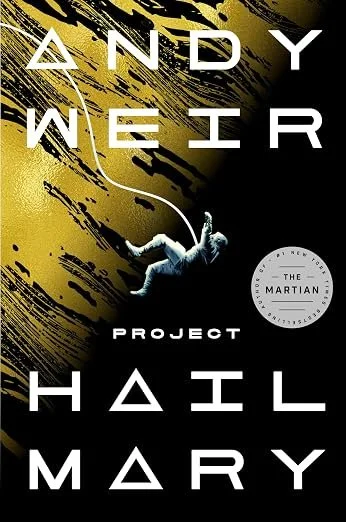
Project Hail Mary by Andy Weir
Ryland Grace wakes up on a spaceship in the middle of seemingly nowhere with no memories of himself or how he got there. His two crewmates are long dead, most likely from health complications that the ship’s system could not handle. Grace soon discovers that he is humanity’s last hope against an extinction-level threat. A mysterious, alien microbe called an astrophage was consuming the Sun’s energy – upon further analysis, scientists discovered this microbe infesting various other star systems, except one: Tau Ceti, to where they launched a spaceship on a mission to find a way to stop the astrophages. Along the way, Ryland Grace forms an unexpected friendship with an intelligent alien, Rocky, who is facing the same crisis in his own solar system. Both of them are the sole survivors of their crew, since Ryland’s fellow astronauts died during the long journey and Rocky’s crewmates died of radiation poisoning. Their collaboration, built on a shared love of science and a sense of duty to help their respective races, is one of the most unique parts of the novel, becoming increasingly important as they race against time to engineer a cure. With a perfect blend of humor, emotional depth, and accurate science, Project Hail Mary is another blockbuster hard sci-fi novel. It is a triumphant tale of resilience, discovery, and unlikely companionship in the void of space. This book is my favorite science fiction book, just ahead of The Martian, also by Andy Weir. I adore the book because it contains plausible science, with realistic events portrayed as accurately as possible, and its story is very unique; for example, Weir describes the physiology and mannerisms of Rocky very intricately, and describes the process of Grace deciphering Rocky’s language, which is almost like music, with amazing detail.
Rating: 4.9/5
Age Recommendation: 15+
ISBN-13: 978-0593135204
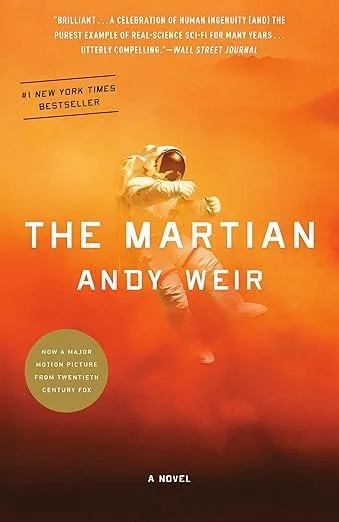
The Martian by Andy Weir
What would you do if left all alone on Mars? In The Martian by Andy Weir, astronaut Mark Watney is stranded alone on Mars after a fierce storm forces his crew to evacuate, believing him dead. With limited supplies, he uses his ingenuity and engineering skills, along with a bit of humor to keep readers laughing, to survive, growing food and modifying equipment. Back on Earth, NASA Command discovers he’s alive and works tirelessly to communicate with him and plan a rescue. Watney endures numerous setbacks, including equipment failures and near-death experiences, due to malfunctioning machinery and the harsh Martian environment, but he remains determined to survive and come home. As for me – where do I even start? This is probably one of the best, if not the best, sci-fi book I have read. I was amazed by Watney’s ingenuity and perseverance throughout the book; Weir’s humor and vivid prose were also excellent. One of the main reasons I liked this book is that it was very realistic and, at least apparently, scientifically accurate. It is very difficult to make this subgenre of science fiction – hard sci-fi – and, in this century, the only other books that are well-written in this subgenre are Alastair Reynolds’ Pushing Ice, Liu Cixin’s The Three-Body Problem trilogy, and Weir’s Project Hail Mary.
Rating: 4.8/5
Age Recommendation: 15+ (Note: the actual book is 15+, but there is a classroom edition, which keeps the language classroom-appropriate, that is 13+)
ISBN-13: 978-0553418026
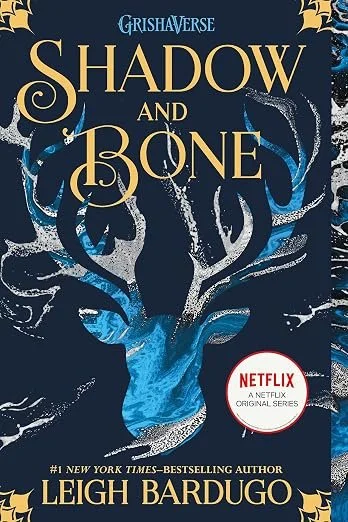
Shadow and Bone Trilogy Book 1: Shadow and Bone by Leigh Bardugo
Shadow and Bone explores the war-torn land of Ravka, where darkness reigns in the form of the terrifying Shadow Fold. The story follows Alina Starkov, an unremarkable orphan and cartographer, whose dormant power to summon light is unexpectedly awakened when she and her friend, Mal, are attacked inside the Fold. This rare ability thrusts her into the elite world of the Grisha and she is whisked away to study under the tutelage of the enigmatic Darkling, who believes she is the key to destroying the Fold forever. As Alina struggles to harness her power and navigate Grisha politics, she is drawn into a web of deception, eventually uncovering that the Darkling’s true plan is not to destroy the Fold but to expand it and rule Ravka. Alina must confront the secrets of the Grisha and those within herself to stop the darkness, as she is perhaps the kingdom’s only hope. With vivid imagery and engaging prose, Bardugo crafts a world brimming with magic, politics, and the fight against evil. I rated this novel on the lower side because I found the plot, conflicts, and characters not very complex or sophisticated; there were almost no twists, making the story “run-of-the-mill.”
Rating: 4.2/5
Age Recommendation: 13+
ISBN-13: 978-1250027436
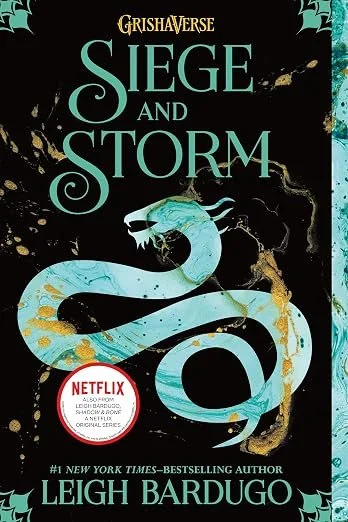
Shadow and Bone Trilogy Book 2: Siege and Storm by Leigh Bardugo
Siege and Storm finds Alina Starkov grappling with the burden of her power and the haunting influence of the Darkling, as she persists in fighting the forces threatening Ravka. Fleeing Ravka with Mal, Alina is soon hunted down and captured by the Darkling, who now wields a horrifying new power: summoning shadow creatures called nichevo’ya. Aboard the ship of the charismatic privateer Sturmhond, who is later revealed to be Nikolai Lantsov, a Ravkan prince in disguise, Alina narrowly escapes and returns to Ravka to lead the Grisha against the Darkling. As she amasses power with the help of a second amplifier, the sea whip’s scales, Alina begins to fracture under the weight of leadership and almost worship-like devotion of her followers. Her relationship with Mal becomes strained as he is discomforted by her sudden transformation. Bardugo’s bold prose captures a world teetering on the edge of war, with Alina torn between defending her country, powers, and relationships. The book crescendoes into a dramatic battle beneath the capital’s cathedral, where Alina unleashes a desperate surge of power that nearly kills her and ends with her broken, powerless, and presumed dead – an excellent setup for her ‘rising’ in the next, and final, book of the trilogy. While I found the ideas interesting, I think Bardugo could have made them more complex. Also, I was not as engaged while reading this – the plot was somewhat boring still and some characters, like Mal, were dull and annoying at times.
Rating: 4.2/5
Age Recommendation: 13+
ISBN-13: 978-1250044433
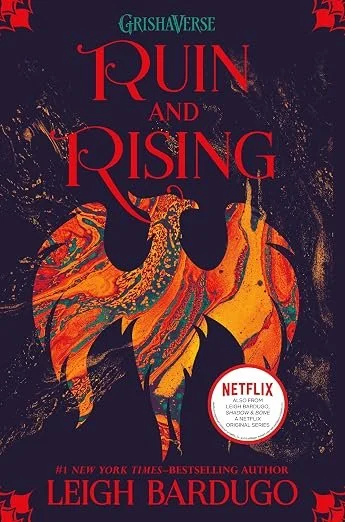
Shadow and Bone Trilogy Book 3: Ruin and Rising by Leigh Bardugo
Ruin and Rising, the awesome conclusion to Leigh Bardugo’s trilogy, delivers a heart-wrenching journey through sacrifice, power, and identity. The story continues to follow Alina Starkov, the Sun Summoner, as she flees underground with the remnants of her army, haunted by her diminishing powers and the influence of the Darkling, who now rules Ravka. With Mal, her childhood friend and a seemingly ordinary tracker, she embarks on a perilous quest for the third amplifier – a mythical firebird – believed to unlock unimaginable power in order to defeat the Darkling. In a stunning twist, Mal himself is revealed to be the final amplifier, forcing Alina to make an excruciating choice between love and salvation for her country. The battle for Ravka culminates in a devastating clash between light and shadow, leaving the Darkling defeated but not without cost: Alina loses her powers and steps out of legend to live a quieter life. Ruin and Rising is both a grand finale and a display of the price of heroism. My main critique of this book is that the ending did not feel very satisfying; the whole trilogy seemed to build up to something more grand and the ending just didn’t capture that. However, the worldbuilding throughout the trilogy as well as a few characters, especially Nikolai, were on par with my preferences.
Rating: 4.2/5
Age Recommendation: 13+
ISBN-13: 978-0805094619
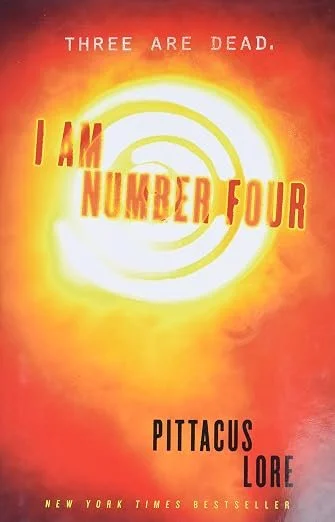
Lorien Legacies Book 1: I Am Number Four by Pittacus Lore
This series was recommended to me by a friend at school; I was surprised that I had never heard of this book before, and was immediately drawn in by the summaries online.
I Am Number Four follows the story of a teenage alien, John Smith, hiding on Earth after his home planet, Lorien, was destroyed by an enemy species: the Mogadarians, who are also Earth searching to finish off the last of the Loriens. John is one of nine gifted survivors, each assigned a number and protected by a magical charm that ensures they can only be killed in order; these nine children and their respective caretakers (called Cepan) are the only ones of their kind left, and they must stay far apart, blending in with the human population or hiding in remote places, in order to avoid detection. The book kicks off when the first three of the nine are murdered, making John, Number Four, the next target. As he settles in a small town in Ohio, John struggles to keep his identity secret while developing powerful abilities called Legacies, which may be the key to his survival against those vying to kill him.
The story blends action and high school drama, mixes science fiction and fantasy. I found it reminiscent of Percy Jackson with its coming-of-age hero being hunted by mythical monsters. This first installment sets the stage for a fast-paced saga as the remaining six teenagers band together to survive and unearth secrets that threaten everybody on Earth.
Rating: 4.6/5
Age Recommendation: 14+
ISBN-13: 978-0061969553
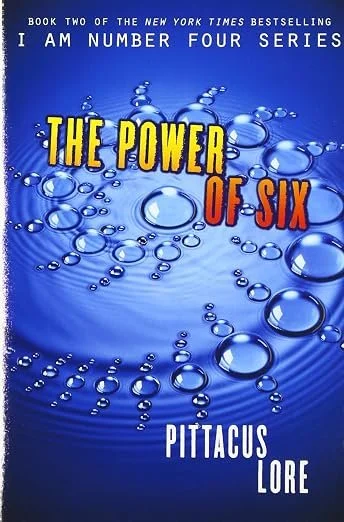
Lorien Legacies Book 2: The Power of Six by Pittacus Lore
Hopefully you read I Am Number Four and couldn’t wait to continue reading the series, like me! We are fresh from the Mogadarians’ bungled attempt to murder John Smith, Number Four, in Ohio – the story, without mention of aliens, has appeared on the news throughout the world. Lore splits the tale into two perspectives. The first is of Marina, Number Seven, who has been hiding out in a convent in Spain along with her Cepan Adelina; Adelina has lost faith in the survival of Lorien while throwing herself into Christianity and thus refuses to train Marina, leaving her ill-equipped in the event the Mogadarians find her. Marina eventually meets Ella, who is actually a tenth Loric child, and they are forced to run from the convent due to a Mogadarian encounter; on the way, they also meet Six. Meanwhile, on the other side of the world, John and Sam uncover many secrets relating to themselves and the Mogadarians, including more knowledge of their powers and how the Mogadarians have established themselves in secret facilities. This novel was just as jam packed with thrilling action and a captivating plot – the only aspect I didn’t like was John’s fickle, overcomplicated romance with Sarah and Six. The part of the book that kept me reading the series was just the plot – I was curious what would happen to the characters; Lore had built such a fantastic background and plot I was too invested in to put down.
Rating: 4.6/5
Age Recommendation: 14+
ISBN-13: 978-0061974571
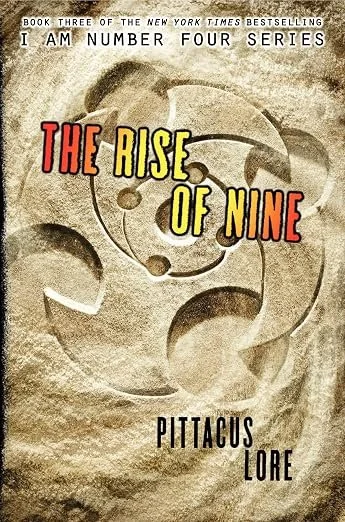
Lorien Legacies Book 3: The Rise of Nine by Pittacus Lore
Previously, we have met all of the Garde except Number Five and Eight. In The Rise of Nine, we meet Number Eight and get to know Numbers Nine and Ten much better; the perspective shifts between Numbers Four, Six, and Seven. Dealing with three POVs became a little confusing, but this was overshadowed by the great writing, plot, awesome action, and developing friendships. The novel opens with the group in Spain (Marina, Six, Ella) traveling to India to try to find another member of the Garde they believe is hiding out in the Himalayas – he turns out to be Number Eight. Meanwhile, John and Nine continue to make discoveries about their chests and Legacies, all while trying to muster up a plan to find Sarah and Sam. I loved the plethora of explosive action throughout the book; although it was a bit excessive or confusing at times, it was an integral part of why I kept liking the series.
Rating: 4.6/5
Age Recommendation: 14+
ISBN-13: 978-0061974588
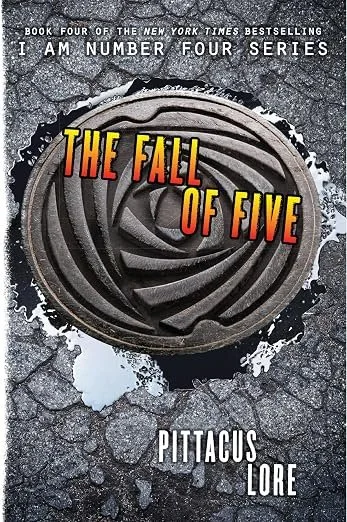
Lorien Legacies Book 4: The Fall of Five by Pittacus Lore
The Garde, now reunited, have regrouped and are recuperating in Chicago after escaping from the Mogadorians. They receive a message from Number Five to meet up with him, and they travel to Florida to find him. Initially, Five seems trustworthy and joins the group, but suspicions about his behavior begin to grow. The team trains together, and tensions rise as Five’s attitude becomes increasingly arrogant and aggressive. Eventually, Five betrays them during a Mogadorian ambush, revealing he has sided with the enemy. During the battle, Eight is tragically killed, and the Garde are forced to retreat in the face of overwhelming odds. It was very interesting to find Sam’s perspective in this novel; I was also very saddened by the death of Eight just after they had reunited and started working together. I continued to love this series for its action and plot (along with all the twists introduced) – I also think that Lore’s writing style improved, becoming more engaging. His descriptions of action scenes made me feel like I was almost watching a movie!
Rating: 4.6/5
Age Recommendation: 14+
ISBN-13: 978-0061974632
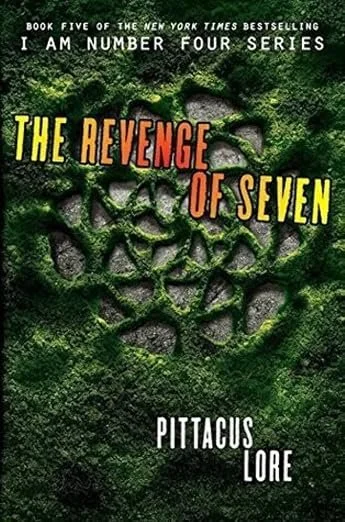
Lorien Legacies Book 5: The Revenge of Seven by Pittacus Lore
Lore arrives with another banger! The Revenge of Seven comes right after the disheartening cliffhanger of The Fall of Five, with the shocking betrayal of Number Five and the kidnapping of Ella. The story follows multiple perspectives, including Ella, who is imprisoned on the Mogadorian mothership and learns disturbing truths about Setrákus Ra’s plans and her connection to him. Meanwhile, John, Sam, and Malcolm regroup and struggle to unite the Garde. Six, Nine, and Seven take the fight to the Mogadorians and the traitor Five, tracking down their bases in Florida. Marina’s arc is particularly gripping, as she struggles with her grief and anger over Eight’s death and begins to show signs of new, darker powers. The introduction of Adam, a rogue Mogadorian who aids the Garde with his knowledge, adds depth to the conflict and keeps the plot full of twists. With escalating stakes, emotional losses, and explosive battles, The Revenge of Seven sets the stage for an epic final confrontation.
Rating: 4.6/5
Age Recommendation: 14+
ISBN-13: 978-0062194732
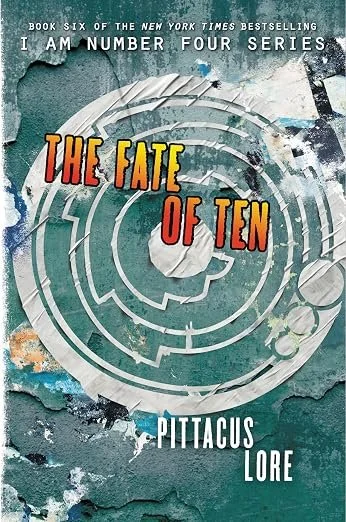
Lorien Legacies Book 6: The Fate of Ten by Pittacus Lore
We continue the story of the Garde, who are now openly fighting the Mogadarians; their fight is no longer a secret since the Mogadarians are fragrantly invading Earth. John leads the defense of New York City, where he discovers he can now use Loralite to teleport, and learns more about Setrákus Ra’s ultimate plan. Meanwhile, Ella communicates with the Elders in a mysterious dream realm, uncovering crucial truths about Lorien’s legacy and her own role. In Mexico, Nine, Five, and the others face off against Mogadorian forces and internal betrayals, including Five's lingering conflict with the team. The powers they discovered at the end of the previous book, The Revenge of Seven, may be the key to saving Earth.
Rating: 4.6/5
Age Recommendation: 14+
ISBN-13: 978-0062194756
Lorien Legacies Book 7: United as One by Pittacus Lore
Lore finishes his amazing series with an explosive final installment, with the remaining Garde uniting for a final stand against the invading Mogadorians. The novel follows Six and John, the latter who takes on the responsibility of leading the Garde and newly empowered humans in a desperate fight to save Earth – all while he learns to master his new Ximic power. As the battles intensify, key characters like Nine, Six, and Marina confront loss, trauma, and the challenge of working as a team despite past divisions. The group finally faces Setrákus Ra, the ruthless Mogadorian leader, in a climactic confrontation that tests the limits of their powers and unity. With Setrákus Ra defeated and the Garde revealing themselves to the world, Earth begins a new era of coexistence between Loric and humans. I was very saddened by a lot of the deaths that happened in this novel; however, I felt it was the perfect conclusion to this seven-book series. I found the emotional depth and action slightly more enjoyable compared to the previous novels. I absolutely loved some of the scenes, including the explosive face-off between Five and John as well as the ending epilogue.
Rating: 4.7/5
Age Recommendation: 14+
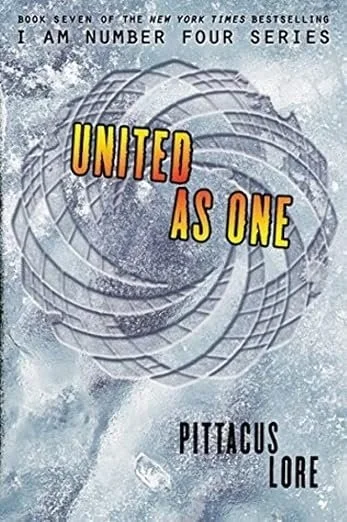
ISBN-13: 978-0062387660
Lorien Legacies Reborn Book 1: Generation One by Pittacus Lore
After finishing the Lorien Legacies series, as usual I tried to find novels by the same author – and I found this! I was immediately excited to see that Lore had continued his awesome series with another thrilling trilogy. In this book, the story starts off after the conclusion of the Garde’s war with the Mogadarians; now, human teenagers across the globe are developing Loric powers and the remaining Garde must teach them how to control their powers, lest they accidentally destroy themselves or the people around them. To do this, they have created an academy to train these individuals – however, not everything goes to plan and new threats begin to rise... There are a lot of new characters that appear here whom I liked; I think Lore took more time to focus on character development – an aspect which worked better in this series. He explores more of their backgrounds prior to their sudden gaining of Loric powers, as well as writes about their motivations for their actions and opinions.
Rating: 4.6/5
Age Recommendation: 14+
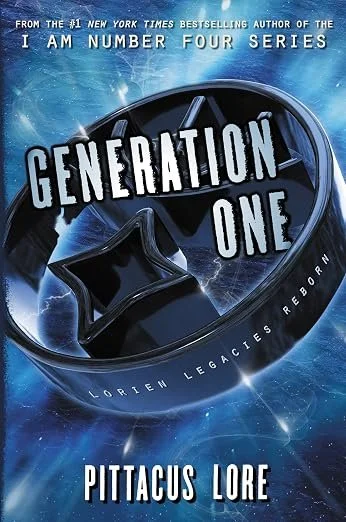
ISBN-13: 978-0062493743
Lorien Legacies Reborn Book 2: Fugitive Six by Pittacus Lore
Although this trilogy did not have as much action that I liked in the original series, I still loved the characters and plot enough to continue (and I’m glad I did). Fugitive Six picks up after the events of Generation One, following the Academy’s students as they hone their Legacies and uncover dangerous conspiracies. Taylor struggles with her growing powers and memories of her abduction in the previous novel, all while trying to fit into a world that increasingly feels manipulated. The Academy promises safety and training, but its secrets run deep – especially with the Foundation, a shadowy group trying to control the humans newly imbued with Legacies for their own agenda. Meanwhile, a resistance forms outside the Academy, drawing in characters like Nigel, Ran, and Kopano, who begin to question who the real enemy is. As alliances fracture and betrayals emerge, a new team dubbed the “Fugitive Six” breaks away, challenging the system they were meant to protect. The dynamics between the foremost characters and their conflicting ideas was interesting to observe; I also liked the appearances of the original Garde in this novel. Nine and John in particular have each changed greatly, and their relationship isn’t much the same anymore. Lore effectively juggles multiple perspectives throughout the novel, creating an engaging narrative.
Rating: 4.6/5
Age Recommendation: 14+
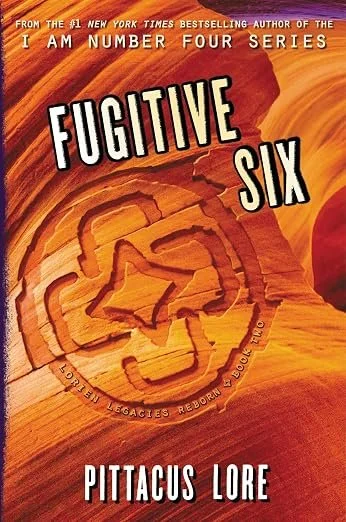
ISBN-13: 978-0062493767
Lorien Legacies Reborn Book 3: Return to Zero by Pittacus Lore
The so-called “Fugitive Six” group is not what they were anymore – they have now fractured into two factions. Conflict is further heightened when the UN passes a decree that all humans possessing Legacies must be subject to the control of inhibitors, devices which limit their abilities and seem almost dehumanizing. In response, the Garde rebel! Meanwhile, another group, containing human Garde as well as Five, venture to hunt down the Foundation. Throughout the book, we also got to see Ella and Marina again – who hadn’t appeared since the original series. The final fight at the end was amazing, with all the Garde standing together despite their differences to fight a corrupt government and ensure a brighter future for other generations of Garde. Also, Lore has definitely moved this trilogy to be more shocking and emotional. One scene towards the end of the novel, in particular, moved me greatly; it will forever remain one of the highlights of Lore’s saga for me. While the ending of this magnificent series was saddening, I was content with the conclusion of the character arcs and liked how nicely Lore wrapped up the various storylines of the plot.
Rating: 4.6/5
Age Recommendation: 14+
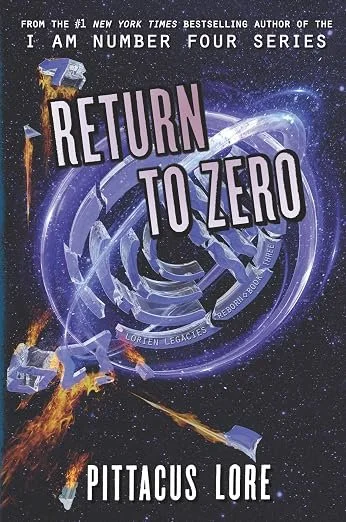
ISBN-13: 978-0062493804
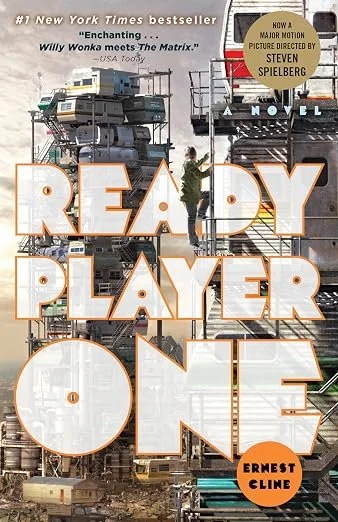
Ready Player One by Ernest Cline
In the year 2044, much of humanity escapes the bleak reality surrounding them by immersing themselves in the OASIS, a vast virtual reality universe. The story follows Wade Watts, a poor teenager living in the “stacks” (akin to filthy apartment complexes – but at least he has a roof over his head) of Oklahoma City, who dreams of winning the ultimate prize: control of the OASIS itself, hidden within a complex Easter egg hunt left behind by its eccentric creator, James Halliday. Halliday, a reclusive genius obsessed with 1980s pop culture, designed the quest to find a worthy heir to his digital empire, sparking a global competition, which has remained stagnant for years as nobody has made progress in even finding the first clue. Wade, under his avatar Parzival, becomes the first gunter (egg hunter) to discover the First Key, propelling him into the spotlight and a deadly race against other clever gunters as well as the powerful, corrupt corporation IOI. IOI, led by the ruthless Nolan Sorrento, will stop at nothing to seize the OASIS for their own profit, even resorting to real-world violence and murder, killing any perceived competition. Along the way, Wade allies with fellow top gunters: the skilled and mysterious Art3mis, the loyal and wise Aech, and the enigmatic duo Daito and Shoto. Together, they navigate perilous challenges based on vintage video games, classic movies, and obscure trivia from Halliday’s youth. As the hunt intensifies, Wade must outwit IOI, survive physical threats, and confront his own insecurities with the virtual world.
While you won’t find immensely deep themes or very sophisticated writing, you’ll find this book perfect just because it's fun. It's a giant competition based on antique video games and set in a virtual reality universe! What’s not there to like? Even if you’re not into this ‘geeky’ stuff, there are wonderfully integrated bits of romance and some interesting character development.
Rating: 4.7/5
Age Recommendation: 15+ (contains some inappropriate stuff that would normally be PG-13, which I disagree with; also, I think the complexity can better be understood at higher ages—but that depends)
ISBN-13: 978-0307887443
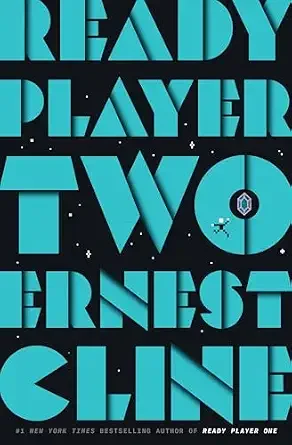
Ready Player Two by Ernest Cline
After reading the thrilling Ready Player One, I was very excited to read Ready Player Two, which I hoped would continue some of the same awesome puzzle-hunt-type adventures, worldbuilding, and the further development of Wade’s and his friends’ characters. However, I was a bit disappointed…
After the events of Ready Player One, Wade Watts discovers a new technology called the ONI (Oasis Neural Interface), which allows users to experience the OASIS with all five senses, even smell and taste. Shortly after its release, a new quest is mysteriously revealed on Halliday’s website: a hunt for the Seven Shards of the Siren’s Soul, tied to the legacy of Kira Morrow, co-creator of the OASIS. As Wade and his friends begin the quest, they face a dire threat from a rogue AI version of James Halliday named Anorak, who takes control of the OASIS and traps millions of users inside. With only 12 hours before the neural interface causes permanent brain damage, the High Five team races to collect the shards and stop Anorak. Along the way, they uncover dark truths about the OASIS’s creators and the ethical implications of immersive technology.
I have to admit I had pretty high hopes for this book after Ready Player One. However, a few things went wrong for me: the plot was a bit too predictable, the puzzle-hunt wasn’t very exciting (it seemed like they immediately figured out the clues without struggling as hard as they did in the first book), and both character development and worldbuilding were lacking. Overall, it just felt less “fun,” as I talked about in my review for Ready Player One. Personally, after Lowengrin and the Low Five were introduced in Ready Player One, I thought that Cline would introduce them as the main protagonists of Ready Player Two, as a sort of ‘new generation’ of players. I would have preferred them to the poorly fleshed-out High Five in this book. I think a few things did work out though: the ending tied up the conflicts neatly, and some of the unique, almost fantastical situations, particularly in the ending, make a lasting impression.
Rating: 4.3/5 (may be one of the few times I’ve rated a sequel so low)
Age Recommendation: 15+ (contains some inappropriate stuff that would normally be PG-13, which I disagree with; also, I think the complexity can better be understood at higher ages—but that depends)
ISBN-13: 978-1524761332
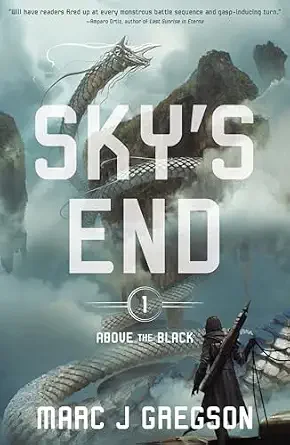
Sky’s End by Marc J. Gregson
Sky’s End opens on the floating island of Holmstead, where sixteen-year-old Conrad of Urwin has been cast down from his place in the world. In the wake of that loss, his only path forward is to join the Gauntlet, a foolhardy contest of airship sailors to hunt leviathans lurking in the sky. The Gauntlet will likely kill him, but it’s his best chance to reclaim his kidnapped sister, avenge his mother, and topple his murderous uncle. Chosen for the deadliest Trade, Hunter, Conrad endures grueling training and the dreaded Gauntlet: a lethal competition among airship crews to kill as many gorgantauns as possible. As Conrad fights aboard the skyship, he contends with rival crewmates to achieve prestigious roles like Captain. Alongside the action, whispers of rebellion below the toxic black clouds of the Skylands hint at a deeper political conflict than Conrad ever imagined. Conrad learns what it really takes to rise – and what he’s willing to sacrifice in the process.
Through gore-soaked battles, mutinous intrigue, and narrow escapes, Gregson weaves a compelling narrative of family, loyalty, ambition, and adventure. I really loved this novel for its thrilling action, which seamlessly combines elements of fantasy and science fiction while also introducing exciting elements of competition and rivalry during the Gauntlet. I was also enamoured by Conrad’s broader fight against the pervasive social hierarchy. It is quite interesting to see how many science fiction and fantasy novels focus on some sort of hierarchy, with characters on the lower levels of it scrambling to reach, or oftentimes topple, the top.
Rating: 4.6/5
Age Recommendation: 14+
ISBN-13: 978-1682635766
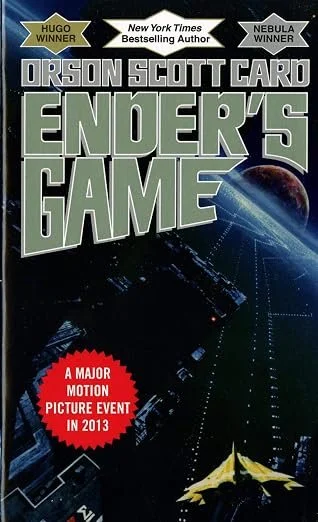
Ender’s Game by Orson Scott Card
In a future where Earth teeters on the brink of annihilation by an alien race known as the Buggers, children are humanity’s last hope. Orbiting high above the planet in Battle School – a cold, metal fortress in space – gifted young minds are trained through relentless games of strategy and survival. Ender’s Game shows us this chilling, high-stakes environment through the eyes of Ender Wiggin, a brilliant but isolated boy chosen for command who just might be the ‘perfect’ general they have been looking for. As Ender rises to the top, he faces increasing isolation from his peers, psychological pressure, and moral dilemmas. Back on Earth, Ender’s siblings Peter and Valentine seek to make their mark on the world; the former grows increasingly politically influential while the latter works to achieve control of the populace’s very beliefs through highly persuasive essay-writing. Their anonymous efforts work towards a brighter future for Earth that ultimately relies on their brother Ender succeeding, winning the war.
This book was one of my first exposures to sci-fi in middle school; beyond the sci-fi, I liked how Card chose to focus his novel on very young kids and their interactions in the context of a heavily competitive schooling environment. While I also find myself pumping adrenaline and competing with my peers, I couldn’t imagine having the burden of humanity’s fate resting on me. Besides Ender, I found Peter and Valentine’s roles to be very interesting – Card not only focuses on the space station and battles against aliens, but also the politics and general opinions taking shape back on Earth.
Also, that twist at the end? Never saw it coming…
Rating: 4.5/5
Age Recommendation: 12+
ISBN-13: 978-0812550702
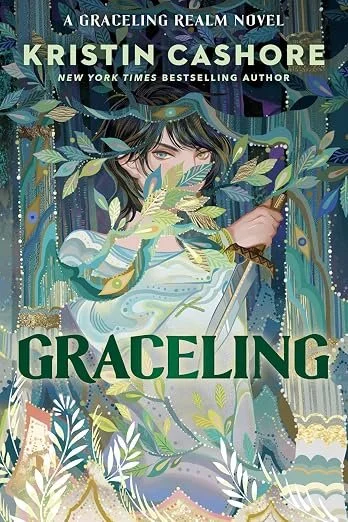
Graceling by Kristin Cashore
In the Seven Kingdoms, certain individuals are born with skills called Graces. Katsa, the protagonist, is Graced with killing – an extremely ‘useful’ skill which her uncle, King Randa, exploits. She struggles with the pressing guilt of the deaths she has inflicted and grapples with notions of identity, believing herself little more than a weapon for her uncle. In an eventful encounter, she meets Prince Po, a charming fighter with a secret Grace of his own. Their bond deepens as they journey together to uncover the truth behind the kidnapping of Po’s grandfather. On the way, they unravel a far more sinister plot involving King Leck, a cruel ruler whose Grace allows him to manipulate minds with just his own voice.
Cashore paints a vivid, fantastical world while showcasing the nature of power and moral responsibility. Katsa’s journey, more than sword fights and royal conspiracies, has her overcoming her fears and gaining her own autonomy. Cashore illustrated Katsa very well, setting up her rich evolution throughout the novel. With its blend of brutal action, fantasy, and romance, Graceling is a must-read tale for fantasy lovers.
Rating: 4.5/5
Age Recommendation: 15+
ISBN-13: 978-0547258300
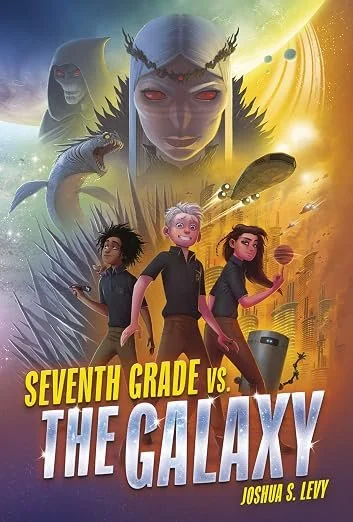
Seventh Grade vs. The Galaxy by Joshua S. Levy
Seventh Grade vs. The Galaxy is an imaginative, fast-paced sci-fi adventure; the story follows 13-year-old Jack Beacon, a student at PSS 118, a public middle school inside a spaceship orbiting Jupiter. After his school is attacked by aliens, he accidentally activates a hidden light-speed engine, built by his father, which catapults the entire school across the galaxy. Suddenly stranded in unknown territory among alien civilizations, Jack, along with his friends Ari and Becka, must navigate alien worlds, decode cryptic messages from his missing father and outsmart the ruling aliens.
Levy masterfully blends middle-school life with cosmic adventures while also depicting Jack’s struggles with feelings of abandonment by his father and becoming a leader. He transfuses the narrative with humor: cafeteria food becomes a tool of rebellion and alien interrogations are compared to awkward pop quizzes.
Seventh Grade vs. The Galaxy is an amazing science fiction novel for middle schoolers, as it is both humorous and adventurous. This book is also part of a series including two other books: Eight Grade vs. The Machines and Last Summer in Outer Space. Despite the strengths of the novel, I would rate this a bit on the lower end because I found the plot a little boring, without much action or plausibility – two aspects of science fiction I personally tend to look for. This may be because my level of sci-fi reading was more mature when I read it, having ‘moved on’ to books geared for higher age levels. I recall being at a loss for books to read and searching for recent sci-fi books. I ultimately landed on this book because the plot piqued my interest. I would rate this low on plausibility because, while I do not hold all sci-fi books to the expectations of hard sci-fi, this novel could have been more nuanced.
Rating: 4.4/5
Age Recommendation: 12+
ISBN-13: 978-1541528109
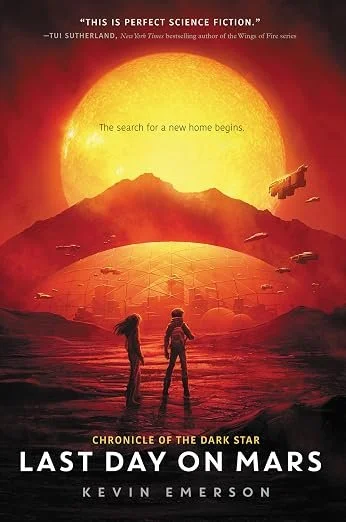
Chronicle of the Dark Star Book 1: Last Day on Mars by Kevin Emerson
Last Day on Mars by Kevin Emerson is a thrilling sci-fi adventure that kicks off the Chronicle of the Dark Star series. Set on Mars, to where humanity moved after the expanding Sun burned Earth to a crisp, the story follows Liam and Phoebe as they uncover secrets that could change humanity’s fate. Mars is a temporary resting spot for humankind – they are planning on taking a 150-year journey to a distant solar system, in which they have scouted a planet to live on. Liam and Phoebe are to be on the very last ship departing Mars; however, on this momentous day, the pair discover the body of an alien, and an explosion occurs at their parents’ labs. It soon becomes apparent to them that there are other forces at play working against humanity… Emerson masterfully blends imaginative world-building and creative storylines. Last Day on Mars was full of twists, which I very much like in fiction novels. It is an excellent choice for middle-school readers who enjoy space exploration and adventure stories.
Rating: 4.4/5
Age Recommendation: 12+
ISBN-13: 978-0062306715
Chronicle of the Dark Star Book 2: The Oceans Between Stars by Kevin Emerson
In The Oceans Between Stars, the second book of Kevin Emerson’s Chronicle of the Dark Star series, the solar system has been wiped from the universe – erased by the Sun gone supernova. Liam and Phoebe, carrying the injured bodies of Liam’s parents in stasis pods, are trying to catch up to the rest of humanity on the planet Delphi. The duo make interesting discoveries, including that someone is intentionally speeding up the life cycle of stars to destroy solar systems – a someone that may still be after them. Phoebe is carrying a secret, one that she still hasn’t told Liam. One that involves covertly changing the direction of their ship from its intended path, and one which will decide the fate of humanity as well as aliens. Packed with twists, vivid world-building (especially the description of Delphi), and exciting adventure, this fast-paced sci-fi adventure is a great read for middle schoolers.
Rating: 4.5/5
Age Recommendation: 12+
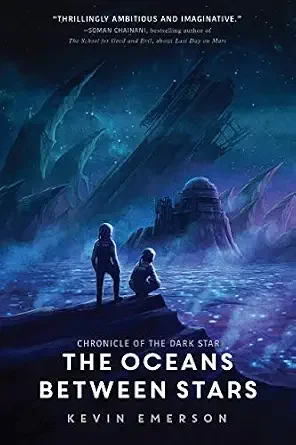
ISBN-13: 978-0062306746
Chronicle of the Dark Star Book 3: The Shores Beyond Time by Kevin Emerson
The Shores Beyond Time delivers a captivating emotional conclusion to the Chronicles of the Dark Star trilogy. In the year 2256, Liam and Phoebe awaken on a deserted starliner, only to discover they’re caught in the grasp of a massive, mysterious alien machine that may hold the secrets of the universe. As they navigate bizarre time loops and visions from ancient civilizations, the true nature of the Dark Star – and its role in shaping alien life across the universes – is slowly revealed. Back in the Centauri system, many of the surviving humans are left stranded in the Centauri system; they must unite with the Telphon refugees before a supernova wipes them all out. This novel was filled with thrilling twists, emotional scenes, and fantastic world-building; I particularly loved the conclusion of the various characters’ stories, from Liam and Phoebe to the outcome of the humans and Telphon races.
Rating: 4.5/5
Age Recommendation: 12+
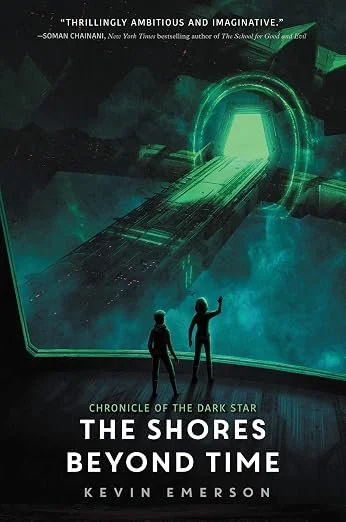
ISBN-13: 978-0062306777
Epoca: The Tree of Ecrof by Kobe Bryant and Ivy Claire
Epoca: The Tree of Ecrof is a richly imagined fantasy novel set in an elite sports academy where gifted young athletes train not just hone physical skills, but the use of their magical powers: grana. The story follows Rovi, a poor orphan from the downtrodden Republic of Lir, and Princess Pretia, a privileged royal from the wealthy Kingdom of Eposia, as they begin their first year at the prestigious Ecrof Academy. As they compete in intense athletic challenges, they must also confront hidden secrets about their pasts – Rovi's mysterious lineage and Pretia’s strained relationship with her father – that threaten to unravel the very foundation of Ecrof. When they discover a dark conspiracy involving corrupted leadership and suppressed truths about Ecrof’s history, they are forced to unite and try to stop the unfair nature of the system designed to enforce a complex hierarchy. Themes of justice, equality, resilience, and the true nature of strength echo throughout the novel, making it both thrilling and thought-provoking. I particularly liked the characters and their development throughout the novel. Moreover, the world-building was fantastic. The way the world was introduced at the beginning was very intriguing; I also found the superpowers, grana, to be especially imaginative and quite unique. The novel overall was a fun read because it put a sports-y spin on what would have been ‘typical’ fantasy story of magically gifted kids at a mysterious school (remind you of anything?) The Tree of Ecrof is one of the most memorable fantasy novels I read in middle school. When I realized Kobe Bryant contributed to the book, I was even more amazed. Bryant was the creator of the story, and he had recruited a writer to help him write the actual novel which would get published by his company Granity Studios. This is an interesting tidbit about the book that clarifies, at least for me, the actual ideas behind the world-building the similarities between some of the novel’s events and real-world sports. Rest in peace Kobe Bryant.
Rating: 4.5/5
Age Recommendation: 11+
ISBN-13: 978-1949520071
Epoca: The River of Sand by Kobe Bryant and Ivy Claire
Epoca: The River of Sand continues the story of Rovi and Pretia, as they leave the safety of Ecrof Academy and journey to Phoenis, Rovi’s homeland, for the Junior Epic Games, only to uncover a deep injustice threatening Rovi’s former gang, the Star Stealers. As they navigate harsh deserts, ancient riddles, and the treacherous River of Sand, the pair must confront their fears and the corruption festering beneath the surface of their society. As unrest surrounds the games, with rumors flying everywhere, Pretia must embrace her role as a leader and Rovi must face his loyalties and navigate his identities, both as a Dreamer and Star Stealer. Rovi, Pretia, and Vera must race against other forces to save the Star Stealers and, on the way, realize that they just might be the right people for reforming Epoca. Ivy Claire writes elegantly, capturing the emotions while delivering thrilling scenes of magic and athleticism. The world-building is exceptional, expanding on the mythology of the first book by diving deeper into class divides and various injustices. The River of Sand is a compelling read; I was deeply saddened when it was announced that this series would not be continued – it has the potential for becoming a great fantasy series, or even a Disney movie!
Rating: 4.6/5
Age Recommendation: 11+
ISBN-13: 978-1949520187