Music Across Generations: Kalimbas (Thumb Pianos)
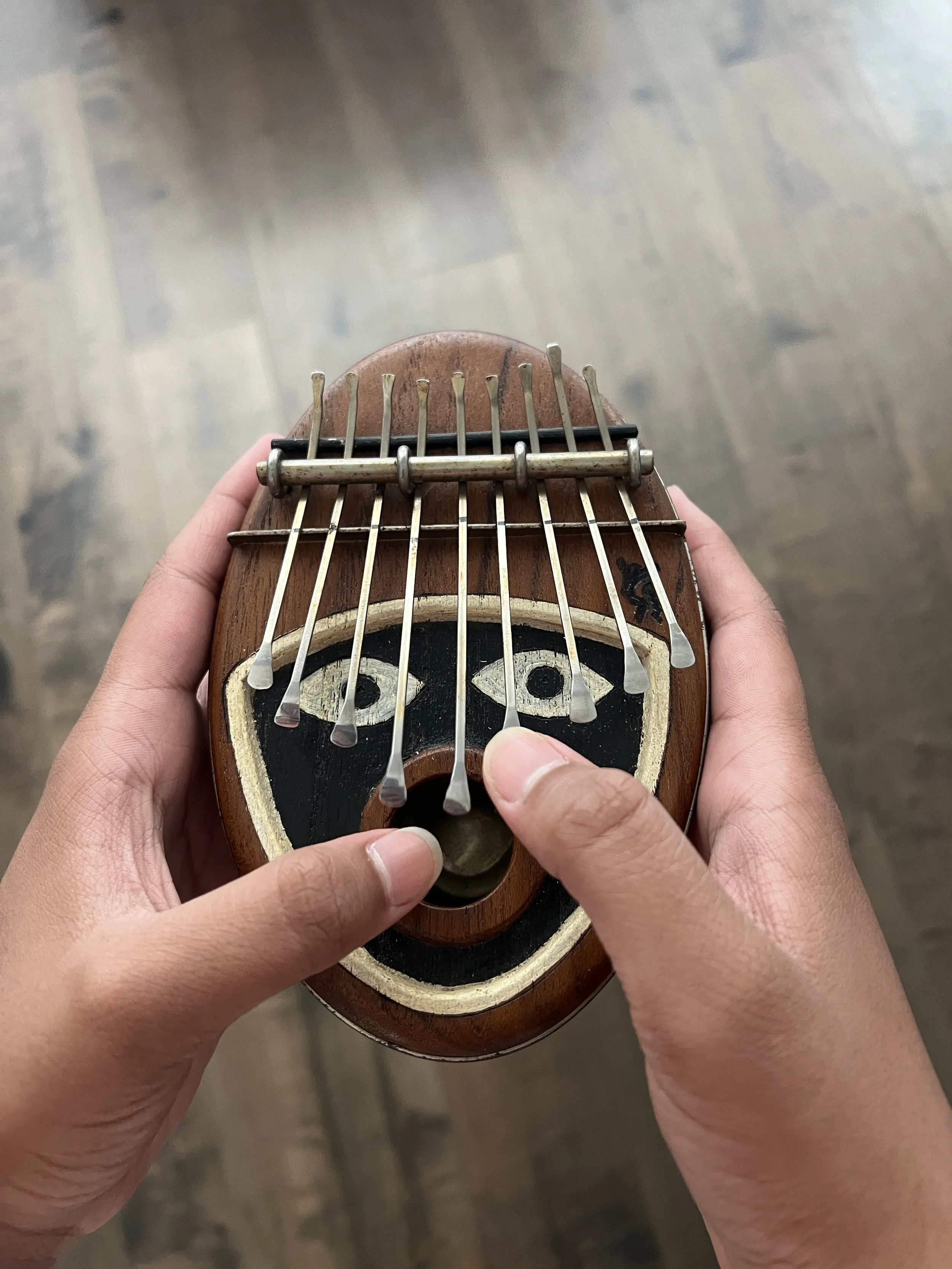
Bringing a collection of kalimbas — African thumb pianos — to retirement and assisted-living communities became a bridge across physical limitations and social isolation.
My aunt first gave me a kalimba sourced from an Indian brand called ZenZula when visiting us.
Myself an avid musician who plays the violin and piano, I was immediately intrigued by the meditative notes reverberating throughout my room when I played it. It reminded me of both the violin and piano: its melodic range and layout reminded me of the piano, while its resonant tones had an expressive quality I associated with string instruments.
The kalimba features steel tines mounted over a wooden soundboard. Depending on the model, a kalimba may be tuned to a pentatonic or diatonic scale. The number of tines can vary from 7 to 42. Simply plucking these tines with one’s thumbs, with very minimal pressure needed, produces soothing notes. While each tine is tuned to a specific note, one does not need to follow a score note by note; rather, freestyling however you like will produce harmony.
For seniors facing physical hurdles such as arthritis, these are much easier to play than other instruments. Familiar instruments like pianos and drums require greater coordination and technique, making them daunting to those with no musical experience.
When played, the magic unfolds through feeling and hearing. When residents cradle the wooden body—much like holding a baby—they feel the acoustic vibrations resonating directly through their hands. As they pluck the tines, they can hear the crisp, meditative notes that relax the atmosphere. Beginning with simple notes one at a time, or even using both thumbs to form simple chords, they can play with confidence.
Beyond the sense of calm and satisfaction this brings, kalimbas reinforce their hand-eye coordination and motor skills without causing any pain.
The kalimba’s value extends beyond physical rehabilitation, to deep emotional connection. Because I had rarely experienced this kind of cross-generational bonding before, sharing these sessions allowed me to connect across generations, countering isolation with warm, shared musical expression. Watching an older resident light up after improvising a peaceful melody revealed how deeply music restores a sense of agency and joy.
This simple thumb piano also has potential far beyond seniors. The same qualities that make it accessible to older adults—its tactile nature, gentle sound, and low barrier to entry—may appeal to stressed adults seeking a mindful pause or even children discovering music for the first time. Across every age group, kalimbas prove that music’s meditative power belongs to everyone.