Nonfiction
Nonfiction
Pursuits of Nonfiction
As a kid, I always shunned nonfiction books, preferring the fantastical adventures of fiction. I viewed books as a means of vicariously escaping the world, not something from which to learn about the sciences—school was enough of that. I was naive; I had no idea so many scientific fields still had millions of unanswered questions. However, as I was growing up and becoming enchanted with mathematics and physics, I started to wonder what humanity had already discovered and had yet to discover in these fields.
The first nonfiction book I read was What If? by Randall Munroe in middle school, an illustrated exploration of absurd scenarios. A more advanced one I’ve read recently is The Physics of Everyday Things by James Kakalios, which dives into the surprisingly complex mechanisms behind ordinary objects like toasters. I have noticed that, as I have delved into the more technical aspects of math and physics outside of popular science books, fewer and fewer of them really intrigue me as they might have done in middle school. They seem too simplified, and I prefer reading textbooks and research papers on the topics instead. That said, I still love this genre for partly sparking my interest in science and feeding my curiosity.
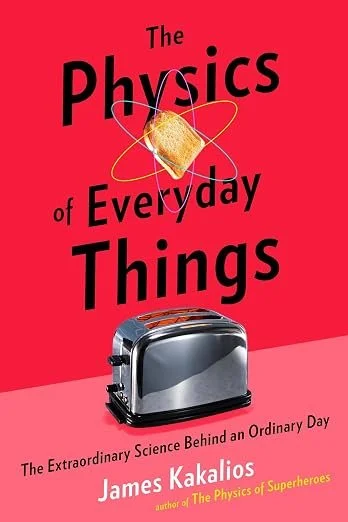
The Physics of Everyday Things by James Kakalios
Have you ever wondered how ordinary tools and ordinary machines work? The answer is more complex than you think. From the moment your alarm goes off to the second you swipe your credit card for coffee, an immense amount of physics and engineering runs in the background. In The Physics of Everyday Things, James Kakalios reveals the extraordinary science hidden in the objects we use every day.
The book is neatly structured around a daily routine: waking up, driving to work, visiting the doctor, and returning home. Kakalios explains the science behind familiar technology like smartphone touchscreens, motion sensors, GPS navigation, and X-ray machines. This book strikes an excellent balance between accessibility and scientific depth. Much like Randall Munroe’s books (such as How To? and What If?), Kakalios avoids dense equations. Instead, he provides clear, intuitive explanations of electromagnetism, thermodynamics, and other physical sciences. For example, he methodically explains how a digital scale uses electrical resistance to measure weight.
As someone who enjoys the hidden science powering the world around us, I found Kakalios’ explanations very satisfying—not too simplified but not at all confusing. The book really transformed the way I look at my surroundings as I go about my usual day. I am more curious than ever about different objects beyond the ones explained by Kakalios.
Age Recommendation: 15+
ISBN-13: 978-0770437732
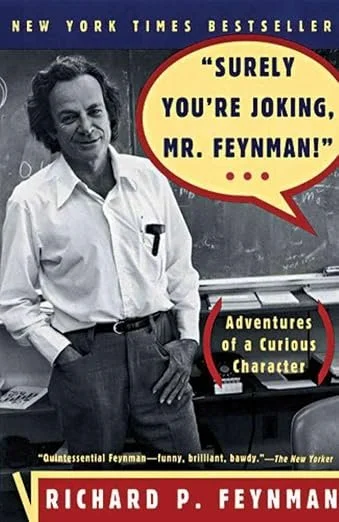
“Surely You’re Joking, Mr. Feynman!” by Richard P. Feynman
As Richard Feynman shows through various autobiographical anecdotes in the book, Nobel Prize-winning physicists don’t all fit the mold of a stuffy academic buried in textbooks and paper scraps. Rather than examining advanced physics or Feynman’s research, this book highlights the eccentric and wildly curious spirit behind the great scientist.
The book chronicles Feynman’s adventures across various stages of his life, from fixing radios as a child to cracking safes at Los Alamos during the Manhattan Project. We see Feynman playing the bongo drums in Brazil, studying biology just for fun, investigating the physics of spinning plates in a cafeteria, and playing elaborate jokes on his colleagues. Beneath the humor, we glimpse his deeply held philosophy on education and learning. Feynman constantly backs a deep conceptual understanding of nature over mere memorization of complex formulae, arguing that truly great science comes from the ability to ask questions.
As someone deeply invested in STEM education, Feynman’s approach to problem-solving resonated with me. I was inspired by his refusal to accept conventional wisdom without testing it himself. This book is perfect for anyone interested in how an unconventional mind approaches the puzzles of the universe (with lots of laughs along the way).
Age Recommendation: 15+
ISBN-13: 978-0393316049
We Have No Idea by Jorge Cham, Daniel Whiteson
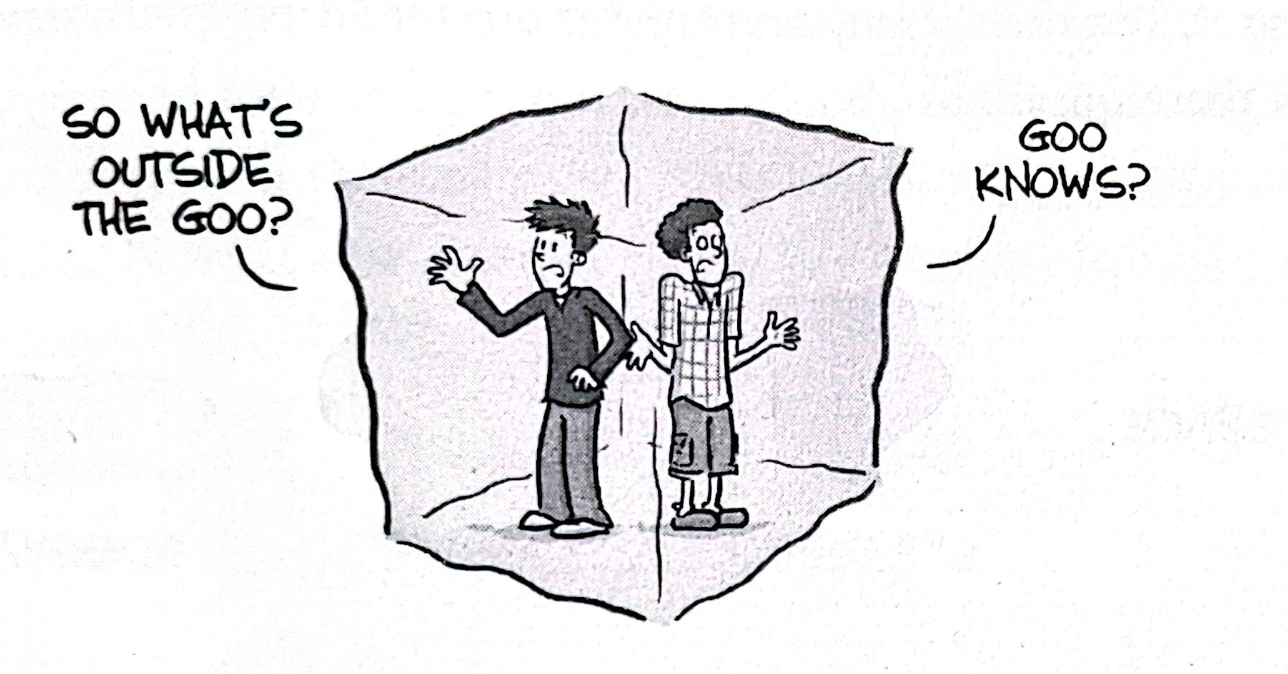
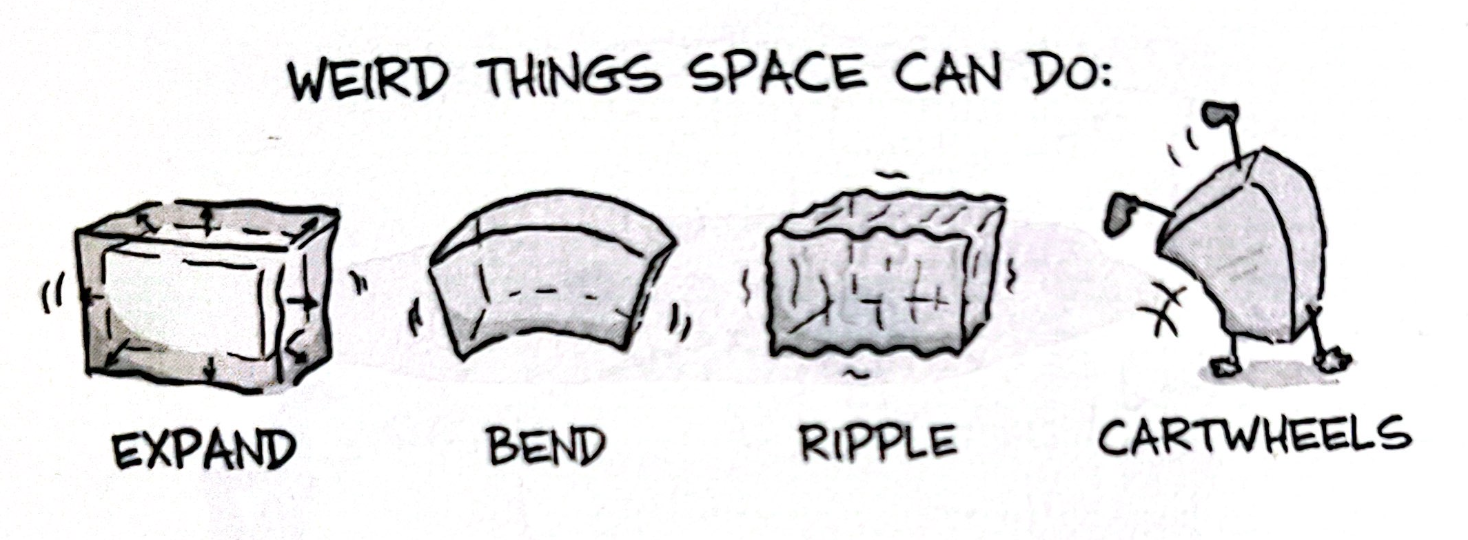
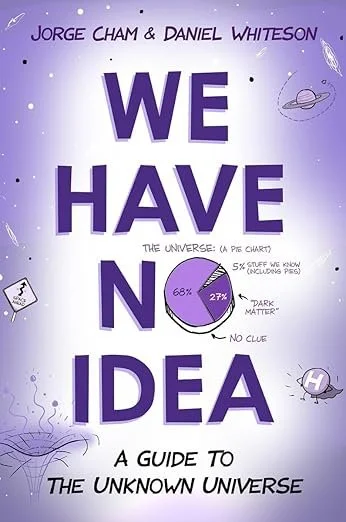
I have always wondered why we cannot travel faster than light or if we will discover aliens someday. At first, Randall Munroe’s books satisfied some of my curiosity. However, I soon found myself wanting to delve deeper into the actual math and physics behind these questions. We Have No Idea explains some of the deepest mysteries in physics that exist today, guiding readers through everything from quarks to black holes. It is very similar to the pair’s other book, Frequently Asked Questions About The Universe, except more scientific and delving deeper into the actual science. The two books both contain sophisticated discussions and use engaging cartoons. The novel explains concepts such as subatomic particles (e.g. quarks and neutrinos), forces (e.g. the strong nuclear force and gravitational force), antimatter, special relativity, the Big Bang, the size of the universe, and the existence of aliens. I personally learned much from this book – ideas that would be hard to understand from basic sources due to their lack of clarity but also difficult to comprehend from advanced journals due to their complexity.
Age Recommendation: 12+
ISBN-13: 978-0735211513
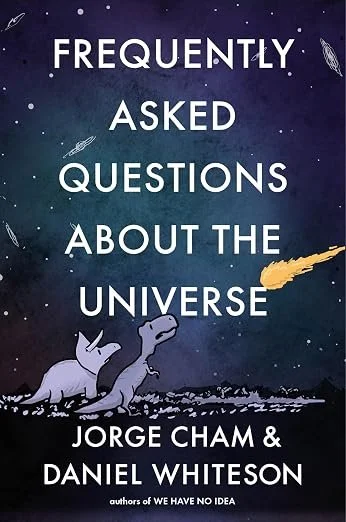
Frequently Asked Questions About The Universe by Jorge Cham, Daniel Whiteson
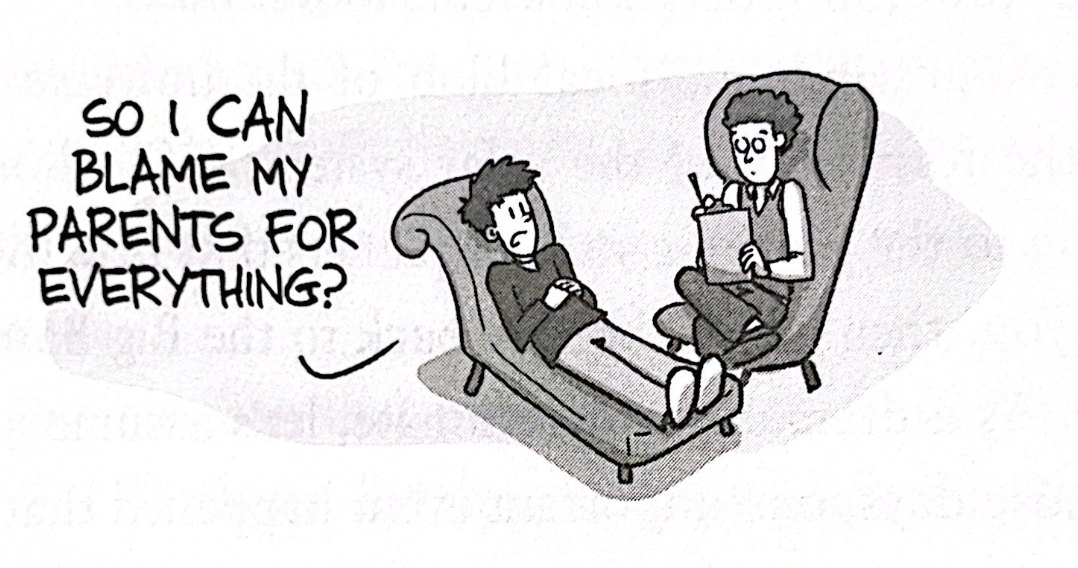
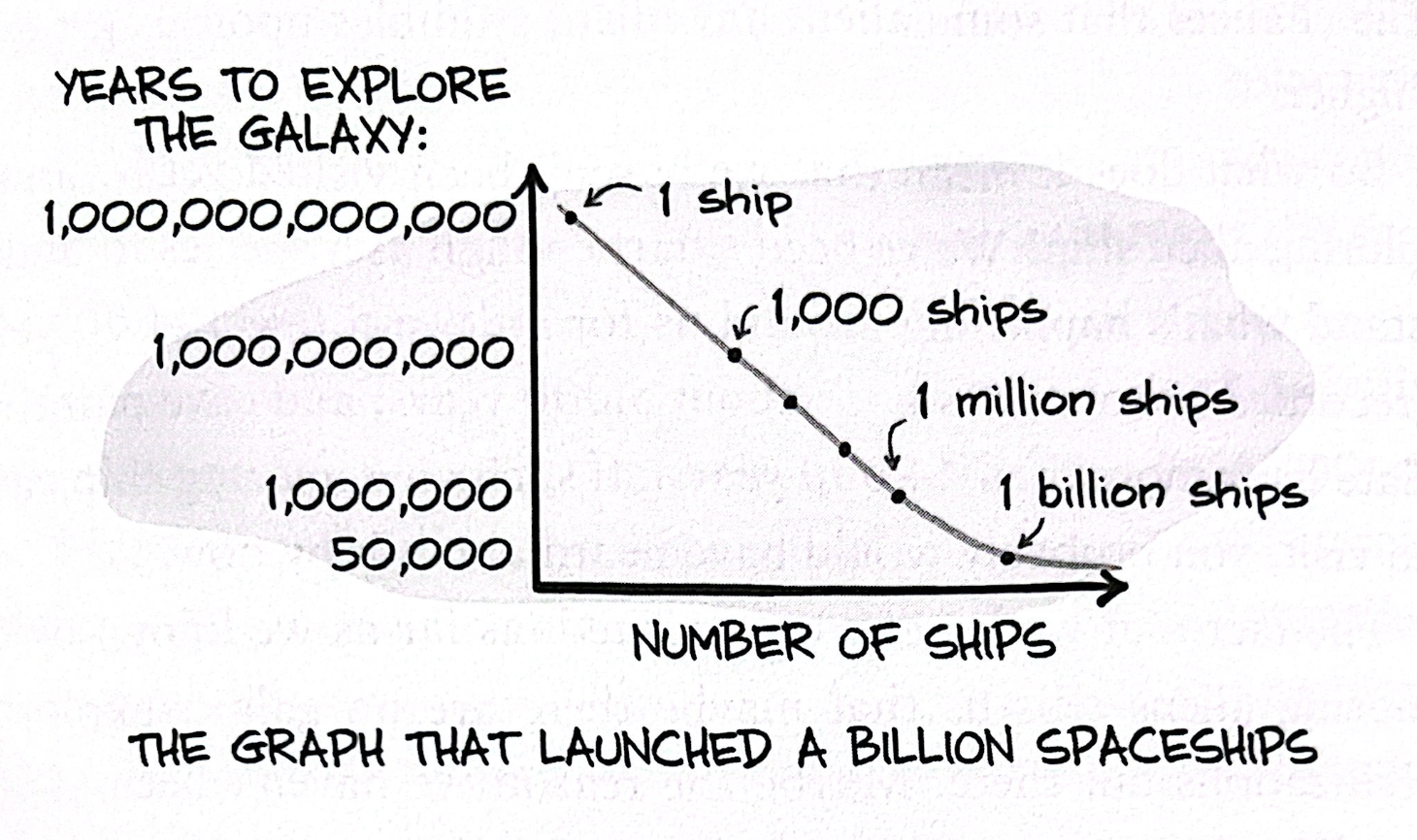
Are you interested in how the universe originated or how to build a warp drive? Frequently Asked Questions About The Universe guides readers through various hypothetical questions such as these, in a similar vein to Randall Munroe’s What If?. Cham and Whiteson answer popular questions about space, time, and the existence of the universe through hard scientific facts combined with hypothetical scenarios. No prior knowledge is required to read this book, as Cham and Whiteson explain physical concepts clearly, at a level beginners can understand. Moreover, their humorous illustrations make the text a delight to read. While I was reading this book in seventh grade, I found numerous concepts which I had never even heard of before, much less begun to understand. However, through the book’s helpful introduction, I was able to research and read about the topics on my own, discovering new areas of astronomy and advanced physics (most of which is still beyond me).
Age Recommendation: 12+
ISBN-13: 978-0593189313
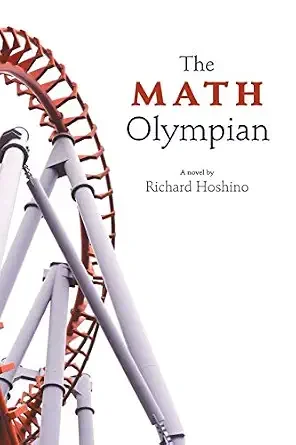
The Math Olympian by Richard Hoshino
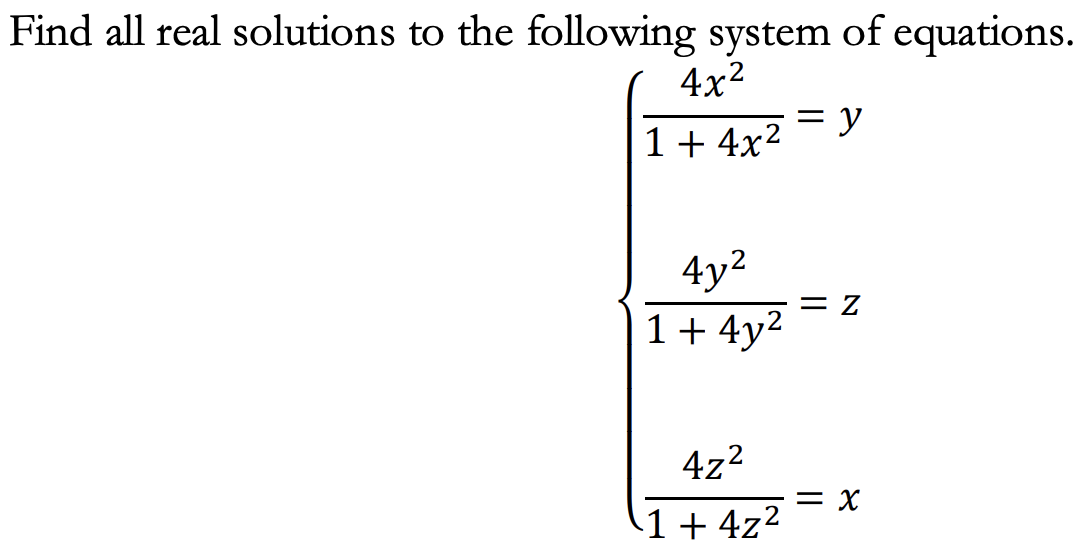
In The Math Olympian, Richard Hoshino expertly weaves the story of a young Canadian girl, Bethany Macdonald, who dreams of becoming a math olympian and representing Canada at the International Mathematical Olympiad. With the support of her teachers and mother, she persists through numerous challenges to clear Canada’s national mathematics exams. Along the way, she develops creative problem-solving skills and unique techniques to solve math problems; she shows that olympiad math is not just memorizing complex formulae but rather uncovering patterns and utilizing creativity to solve problems. The novel is split into five ‘parts’, each corresponding to a problem on the national olympiad exam Bethany is taking. Through her journey, readers can learn a lot about mathematical intuition and various mathematical techniques and problems. Personally, as a math enthusiast myself, I found this book to embody much of what I have experienced whilst preparing for and writing math competitions. I was immediately hooked when, on the very first page, Hoshino had explicitly listed five math problems – I just had to try them on my own before reading the story!. Overall, this novel would be perfect for someone interested in math competitions or curious about the persistence involved in pursuing one’s dream.
Age Recommendation: 12+

ISBN-13: 978-1460258736
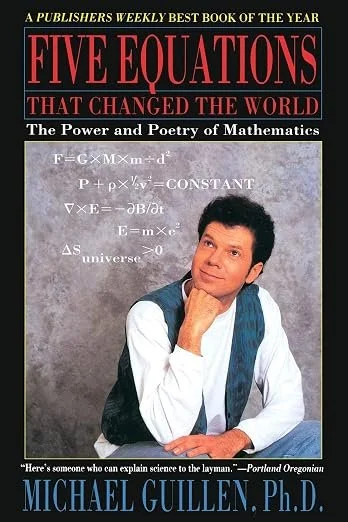
Five Equations That Changed The World by Michael Guillen
In Five Equations That Changed the World, Michael Guillen eloquently brings together biographies, history, and the sciences to unveil the discoveries and potential applications of five revolutionary equations: Newton’s universal law of gravity, Bernoulli’s law of hydrodynamic pressure, Faraday’s law of electromagnetic induction, Clausius’ second law of thermodynamics, and finally Einstein’s theory of special relativity (including the very famous E=mc^2). He immerses the reader in the personal struggles and triumphs of the scientists who discovered these equations – for example, Newton worked largely in solitude and Bernoulli was influenced by family feuds and intellectual rivalry. He describes Einstein as an eccentric patent clerk who reimagines mass and energy in his groundbreaking E=mc^2 equation. The book also delves into the consequences of these equations. Clausius’s entropy and second law of thermodynamics foreshadows the eventual heat death of the universe. Thematically, the book displays the persistent quest for the knowledge of nature’s hidden mechanisms, often achieved at great personal cost. On the technical side, I liked how the book provided understandable explanations of these somewhat complex formulations, providing intuitive reasoning with numerous examples. Beyond the science, learning the backgrounds of these famous scientists and how their discoveries proved incredibly useful for the world fascinated me.
Age Recommendation: 12+
ISBN-13: 978-0786881871
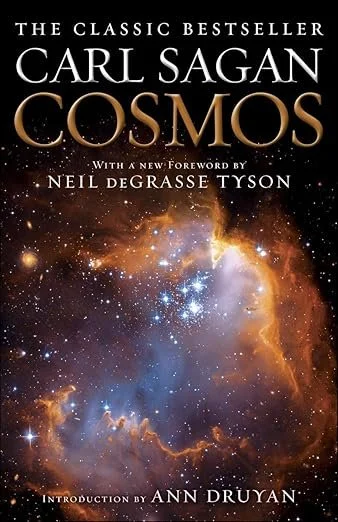
Cosmos by Carl Sagan
Carl Sagan’s Cosmos is an eloquent masterpiece leading the reader through the multi-billion-year evolution of the universe and our place within it. Sagan teaches not only astronomy but also history, philosophy, and anthropology, exploring how our curiosity about the cosmos has shaped human civilization. He explores everything from the profound discoveries of ancient scientists like Eratosthenes, who calculated the Earth’s circumference with shadows, to celestial mechanics, exploration of Mars, and theoretical possibilities of interstellar travel. Sagan makes incredibly complex astrophysical concepts understandable and awe-inspiring, masterfully balancing scientific fact with profound reflection.
As an avid reader and astronomy enthusiast, I found this book very transformative. Sagan has a rare ability to spark a great sense of wonder. He made me feel incredibly small on the grand scale of the cosmos, but still quite significant as a conscious being capable of understanding the universe. While some of his predictions and discussions have since been updated by modern data, the book’s core scientific principles and push for unified scientific literacy remain essential today.
Age Recommendation: 12+
ISBN-13: 978-0345539434
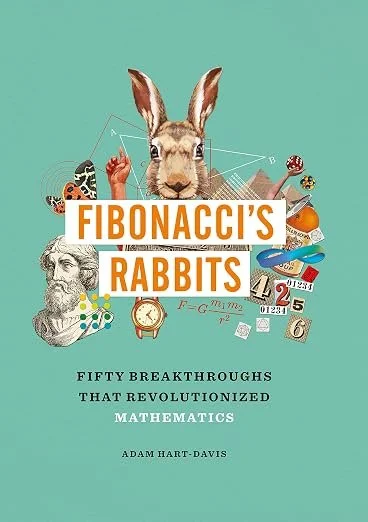
Fibonacci’s Rabbits by Adam Hart-Davis
Fibonacci’s Rabbits is an engaging journey through fifty of the most pivotal moments in mathematics, weaving from ancient tally‑marks to modern scutoids. Each chapter is a short introduction to one of these mathematical breakthroughs, combining historical background, clear explanations, and fun anecdotes with curious illustrations. Hart‑Davis makes mathematical history accessible without dumbing it down very much, sparking curiosity rather than intimidating his audience. The book provides just enough background that one can understand the discoveries, but it leaves enough room for personal research. I personally felt that the ideas could have been explained more, as some discoveries were only mentioned briefly without much explanation. This was a bit frustrating, as I had to research these topics on my own (which is not easy, since some of them are quite advanced and do not have simplified explanations available). Overall, the book is a vividly illustrated commemoration of the major history of math — ideal for anyone curious about how numbers have shaped our world.
Age Recommendation: 12+
ISBN-13: 978-1627951883
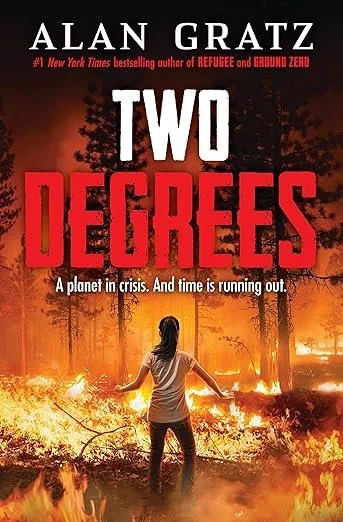
Two Degrees by Alan Gratz
In Two Degrees, Akira, Owen, George, and Natalie face life-threatening climate disasters in different parts of North America. Akira struggles to flee from a raging wildfire in California that has spontaneously started while she is outside horseback riding. In Northern Canada, Owen and his friend George are stalked by a starving polar bear, who has been forced south due to melting ice and is failing to adapt to the new ecosystems it finds. Meanwhile, Natalie is swept up in a catastrophic hurricane in Florida and tries to survive the rising floodwaters, which have submerged buildings up to their roofs, amid dwindling hope. The novel’s structure shifts between these narratives until the protagonists’ paths collide at a climate rally in Washington, D.C., where they tell their stories and advocate for a fight against climate change and a better future. Gratz uses vivid imagery and intense action sequences to keep readers on edge, painting climate change not as a distant threat but rather a very terrifying, present reality. I have been hooked on Alan Gratz’s books since fifth grade, when I read his books on World War II (look at my book reviews in the “Historical” tab!). I love his focus on children’s experiences in traumatic situations; this combined with the issue of climate change, a very pressing, modern issue I am sure most people are concerned about, makes the novel a great read. This issue of climate change is also why I have placed this book in the “Nonfiction” section, even though it is fiction.
Age Recommendation: 12+
ISBN-13: 978-1338735673
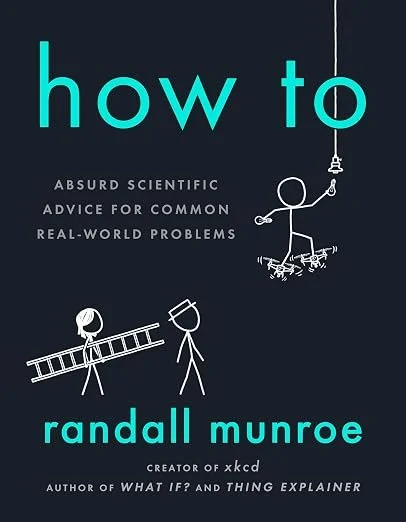
How To by Randall Munroe
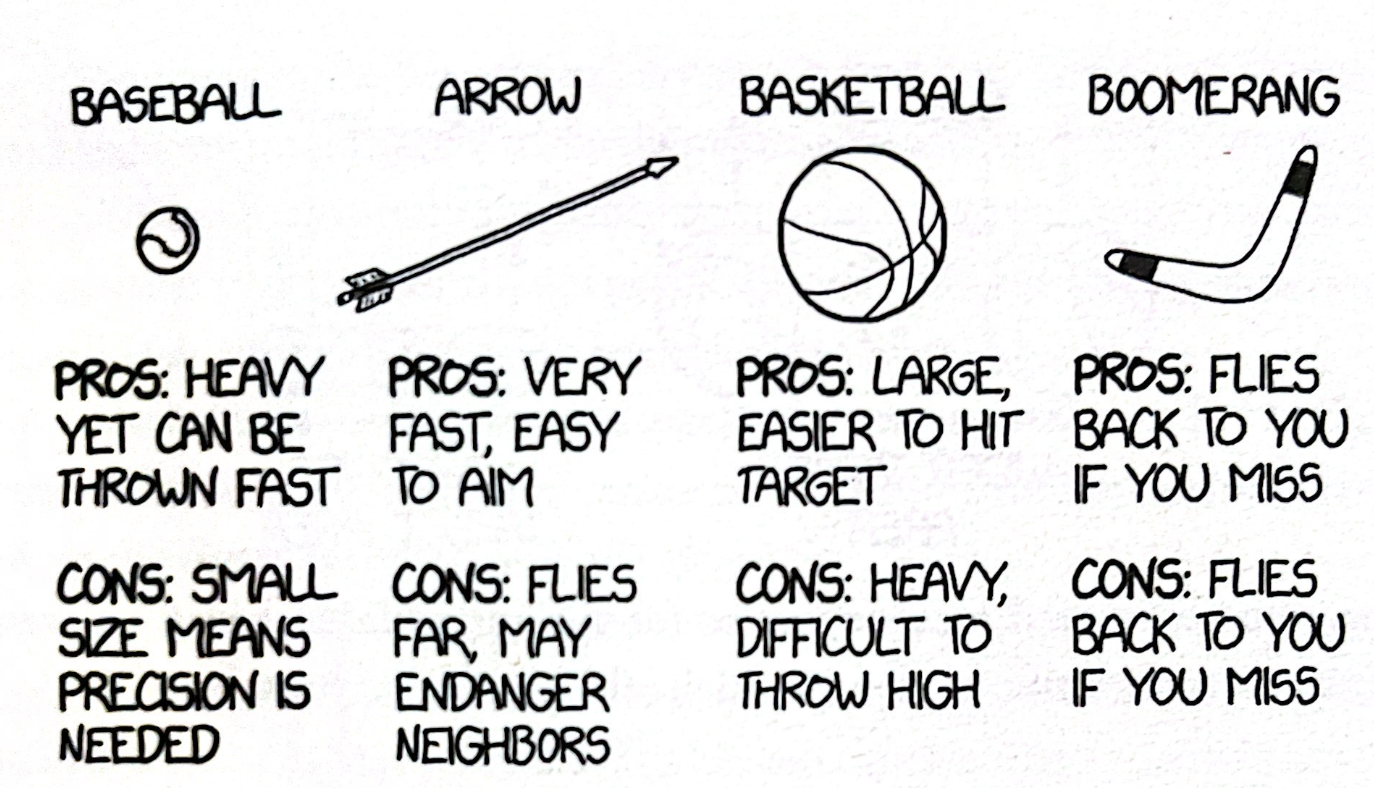
How To? is the ultimate guide answering how to do anything plunged from the depths of your imagination. It is perfect for young kids, particularly middle schoolers, curious about applications of scientific concepts to solving real-world problems, however fantastical. Munroe explores a multitude of scenarios, from jumping very, very high to powering a house on Mars to winning an election. He doesn’t just give answers, he explains his methodology and reasoning. For example, he explains that one cannot use wind power as a source of energy on Mars as the air is very thin. When exploring how to jump very high, he says that a pair of glider pilots rode winds all the way to a height of fifty thousand feet above sea level. That’s double the height of Mt. Everest!
If you think some concepts might be too abstruse, don’t worry! Just like his other books’ Monroe doesn’t go into very much technical detail while still explaining valuable concepts at a middle school level. As for myself: upon reading Munroe’s previous books like What If? and What If? 2, I was interested in the how – how one can achieve seemingly impossible tasks – which this book was perfect for. Besides the science, How To? taught me numerous interesting fun facts, some of which I still remember to this day.
Age Recommendation: 12+
ISBN-13: 978-0525537090
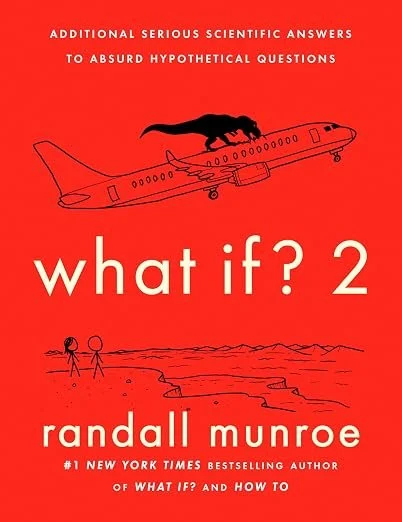
What If? 2 by Randall Munroe
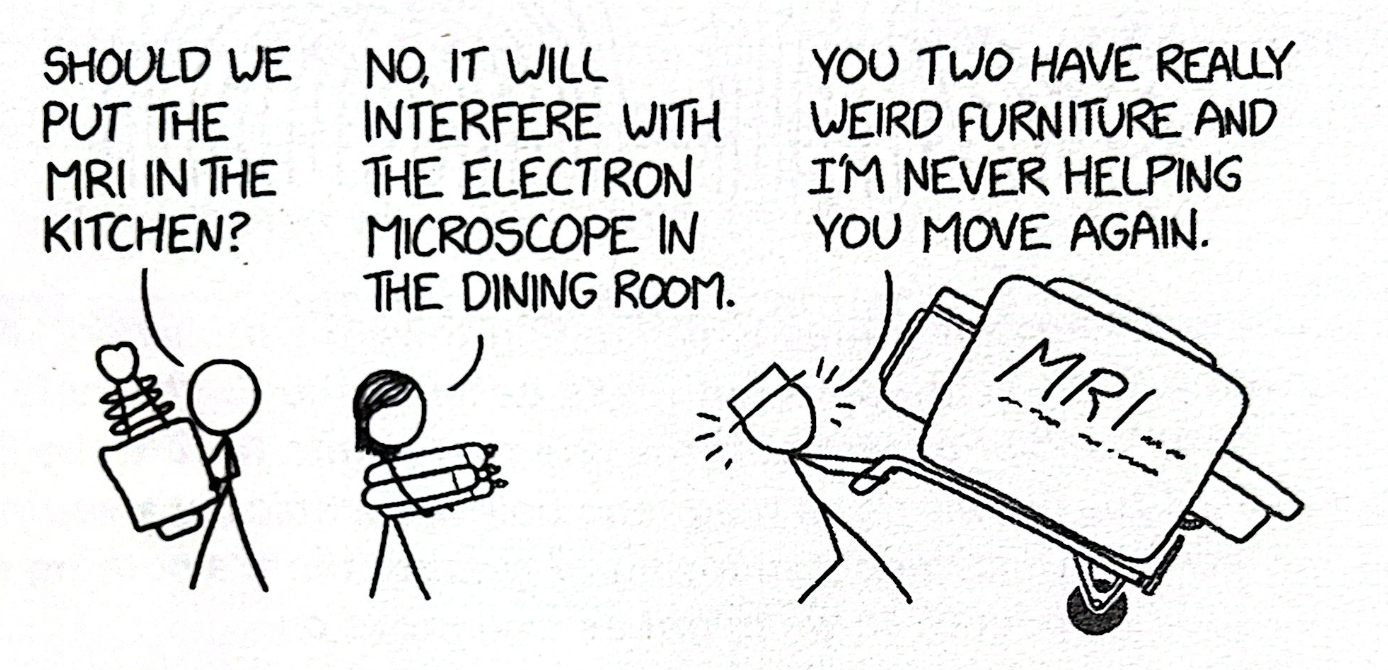
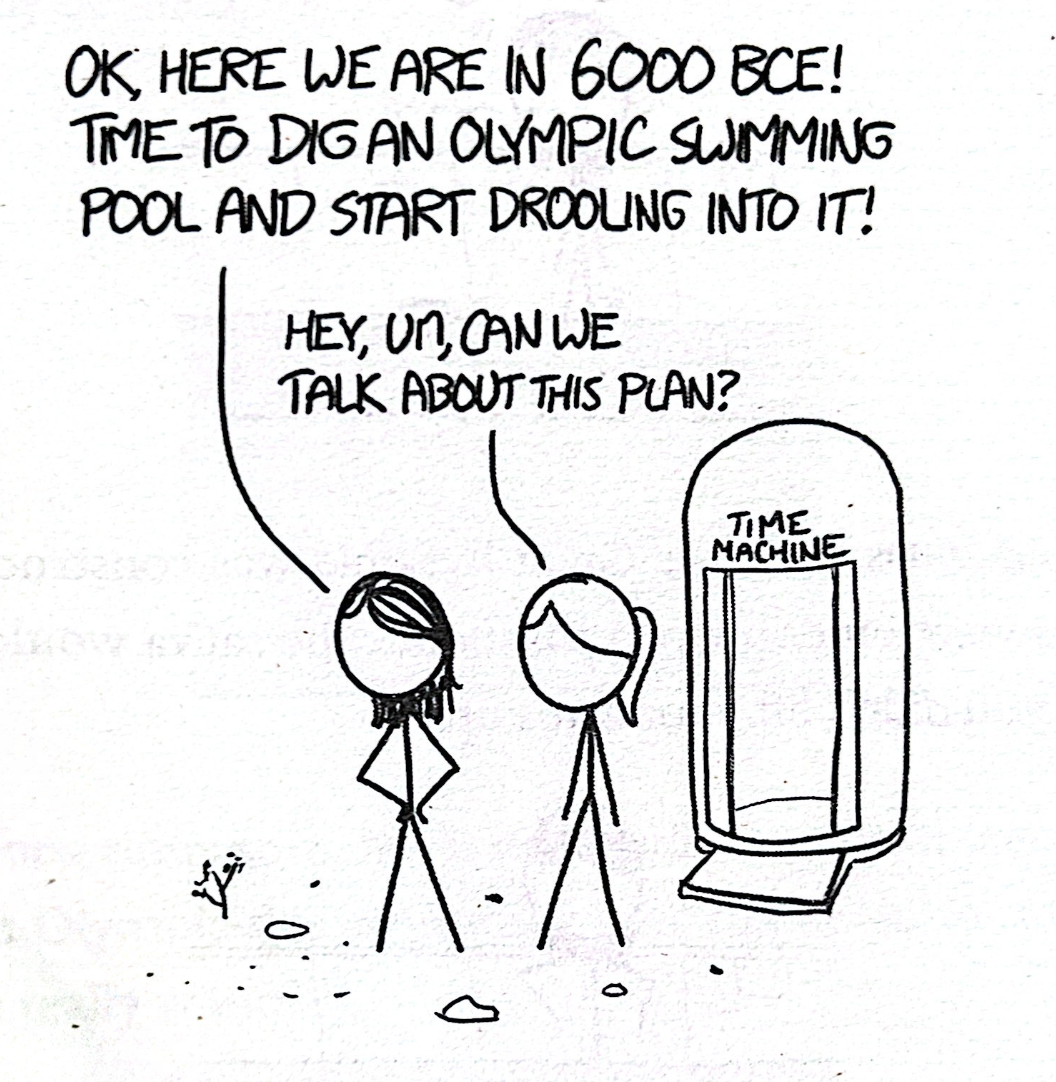
I was excited to read What If? 2 when it came out, as I had previously read Randall Munroe’s What If? and was excited to see what more imaginative questions he had looked into. What If? 2 is a very intriguing book for those interested in science or who simply express a natural curiosity. Munroe answers questions submitted by real people on a range of topics, from physics to engineering to miscellaneous topics. While Munroe makes it very accessible to middle schoolers, I feel that most of the intellectual potential wasn’t robbed from the topics. Munroe presents clear explanations of his answers, combining serious fact-giving with lighthearted humor and illustrations. Some questions he answers are “What happens to the rubber that wears off of the tires of cars and trucks – it is not seen very clearly to build up on highways or anywhere else?” and “How far would an Earth-sized eyeball be able to see?”. If you want to know the answers to these, read the book! Munroe’s lighthearted tone and easy writing style made for an enjoyable flow, not filled with dense, overly complex explanations.
Age Recommendation: 12+
ISBN-13: 978-0525537113
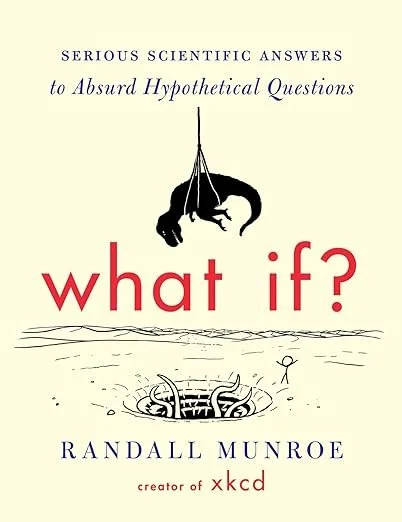
What If? by Randall Munroe
What If?, much like its sequel What If? 2, is a brilliantly written, thorough book about a variety of scenarios based off of questions submitted by real people to the author, Randall Munroe. Munroe answers questions on a range of topics, largely physics and other scientific fields. I would recommend What If? to any middle schooler, regardless of their interests – whether you are interested in science or simply bear a curiosity for learning. Do you want to learn if, for example, it is possible to live on an asteroid like the Little Prince? Or if having billions of laser pointers pointed at the Moon would change its color as seen from Earth?
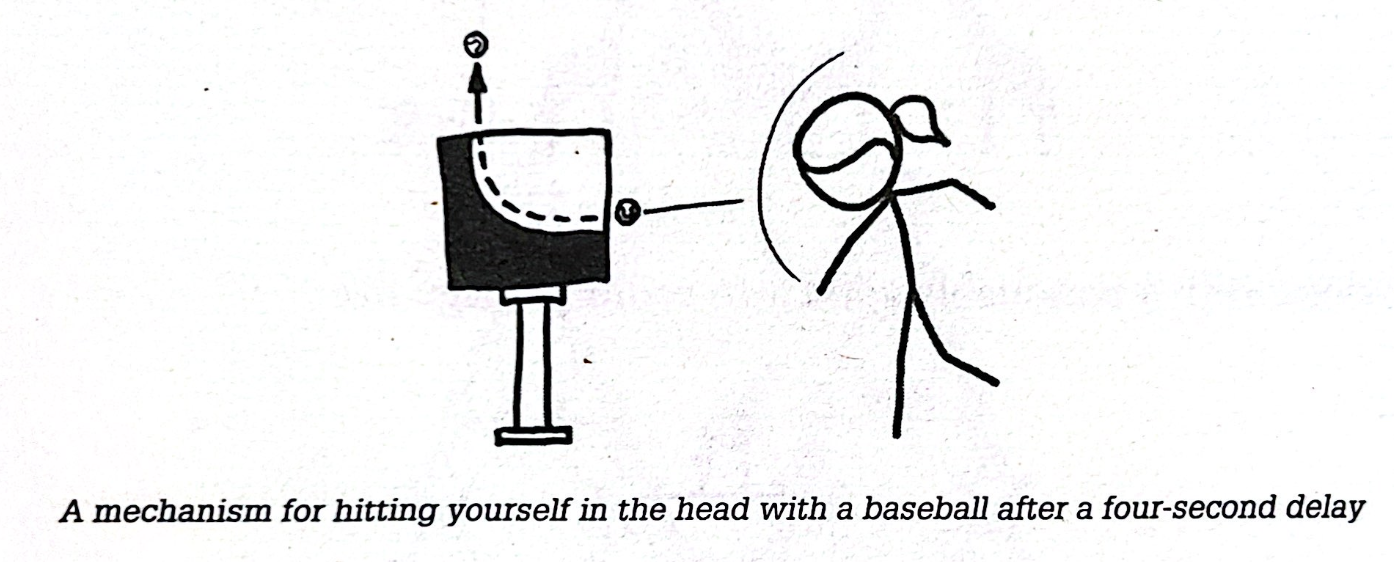
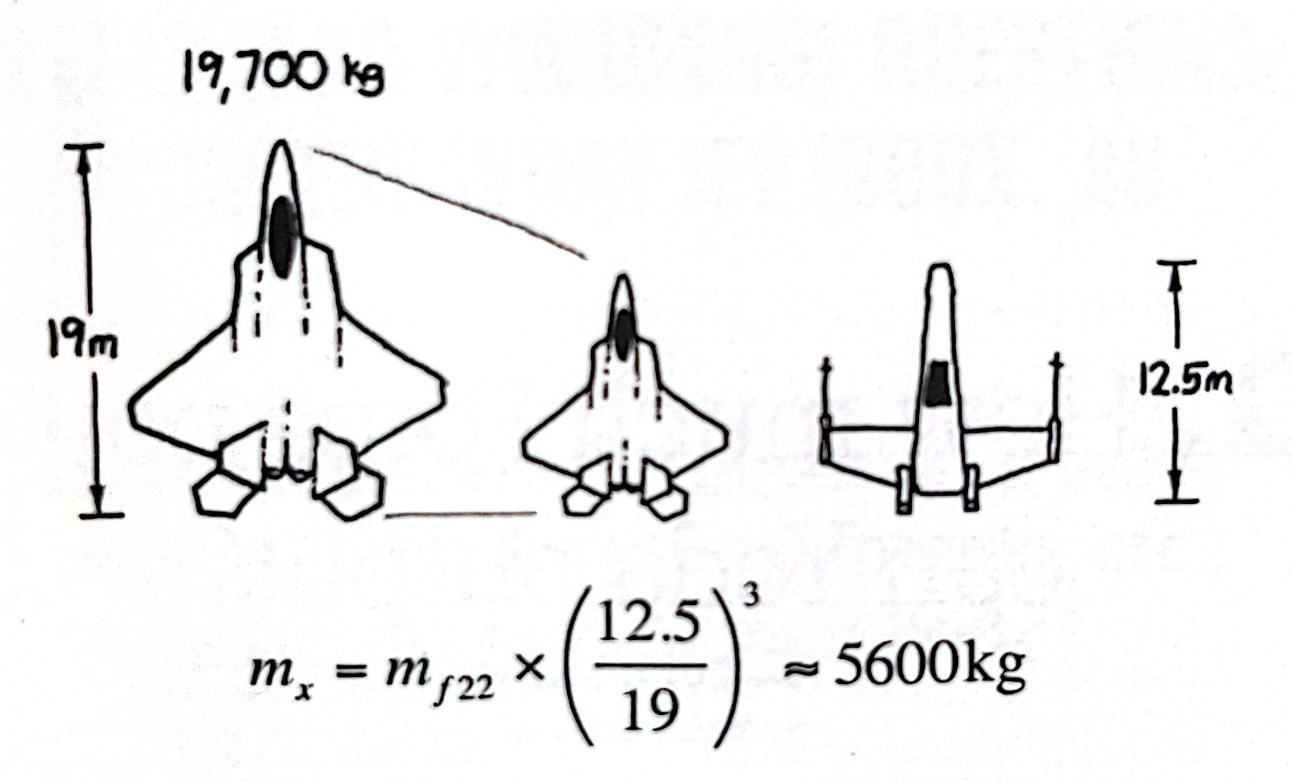
What If? is also very straightforward to understand because of Munroe’s clear explanations and helpful diagrams; this distinguishes it from other books as it caters to a younger audience without destroying too much of the knowledge being written or complexity of the ideas. Personally, What If? was one of the first nonfiction books I ever read, and it immediately got me hooked on not just the sciences but also other similarly themed books.
Age Recommendation: 12+
ISBN-13: 978-0544272996