Securing My Neighborhood
Present: Continuing engagement with City of Saratoga
July 2026: Presented survey results to City Manager
June 2026: Surveyed neighbors’ thoughts and opinions
April 2026: Attend city council meeting discussing data handling, issues, and success stories
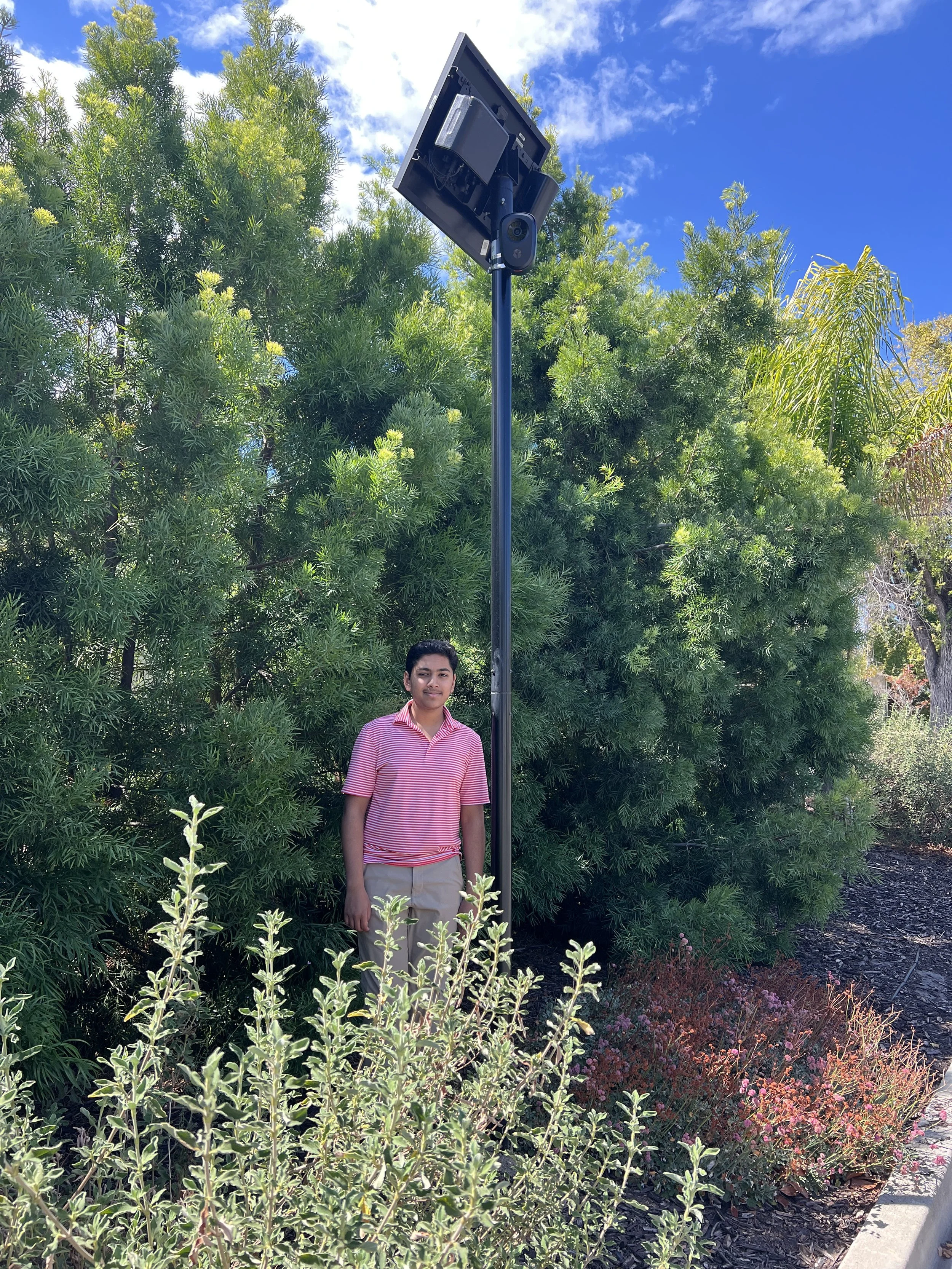
November 2025: Cameras installed
July 2025: Vote passes
June 2025: Made neighborhood directory; went door-to-door discussing with neighbors
February 2025: Preliminary meeting with neighbors
In the few years prior to 2025, my neighborhood experienced roughly four crimes per year. These crimes consisted mostly of catalytic converter thefts (a valuable part of cars) and home break-ins. A catalytic converter was stolen from my family’s own car. When poring over our security camera footage from that night, we were amazed at how quickly the thieves stole that part of the car. The police weren’t able to pull any information from this video nor that of my neighbor’s security cameras. The only potentially identifiable object was the license plate, which was unreadable due to the cameras’ poor night vision.
Many of my neighbors are elderly folk living alone on fixed incomes, making the cost of repairing a damaged car or home especially burdensome. I knew many couldn’t afford the damages thieves would wreak on their cars and homes.
So, I decided to do something. After researching online and attending a city council meeting, I discovered a city program to install security cameras that have excellent night vision. I found out that installing just two of these cameras would protect an area of nearly sixty households in my neighborhood.
After holding a preliminary meeting to gauge interest, another neighbor and I reached out to the city council to initiate the project for our neighborhood. We worked together with the city manager overseeing the program to make a map of the protected houses. To install the cameras, we would then have to obtain a majority vote among our neighbors. We went door to door, discussing the details of the cameras—pros and cons—with each household. Cons included questions about cost and data security. I asked about their experiences with break-ins and their tentative stance on the cameras. Along the way, with residents’ permission, I made a directory of the houses, with names and phone numbers, for our organizational purposes and to eventually create a messaging group. This also gave me an opportunity to connect with neighbors I had never interacted with before.
In the end, the vote passed by a wide margin. After the cameras were installed near the end of 2025, we have experienced only one such crime so far. Many neighbors have told me that they feel safer knowing the cameras act as an effective deterrent and provide evidence should it be needed.
I am currently engaged with my neighbors and the city to bridge ongoing issues about the cost of the cameras. I have connected with other adjacent neighborhoods to expand this program—installing just four more cameras would protect more than 400 houses!